How to Plan a Kayak Trip Around Shrinking Daylight
Quick Answer: Usable paddling light ends well before sunset - on the water, meaningful visibility typically fades within about 20 to 30 minutes of sunset, and earlier under cloud, on tree-lined water or on a river in a valley. Autumn removes roughly two to three minutes of daylight per day at mid latitudes, so a trip that fit comfortably three weeks ago no longer does. Plan backwards from a turnaround time, not forwards from a launch time, add a buffer for headwind on the return, and carry lights and a headtorch regardless of the plan. Being caught out in the dark on cooling water is a considerably more serious situation in October than in July.
The route you paddled all summer takes exactly as long as it did. Everything around it has changed.
Here is how to plan an autumn trip so you are off the water with margin rather than racing the light.
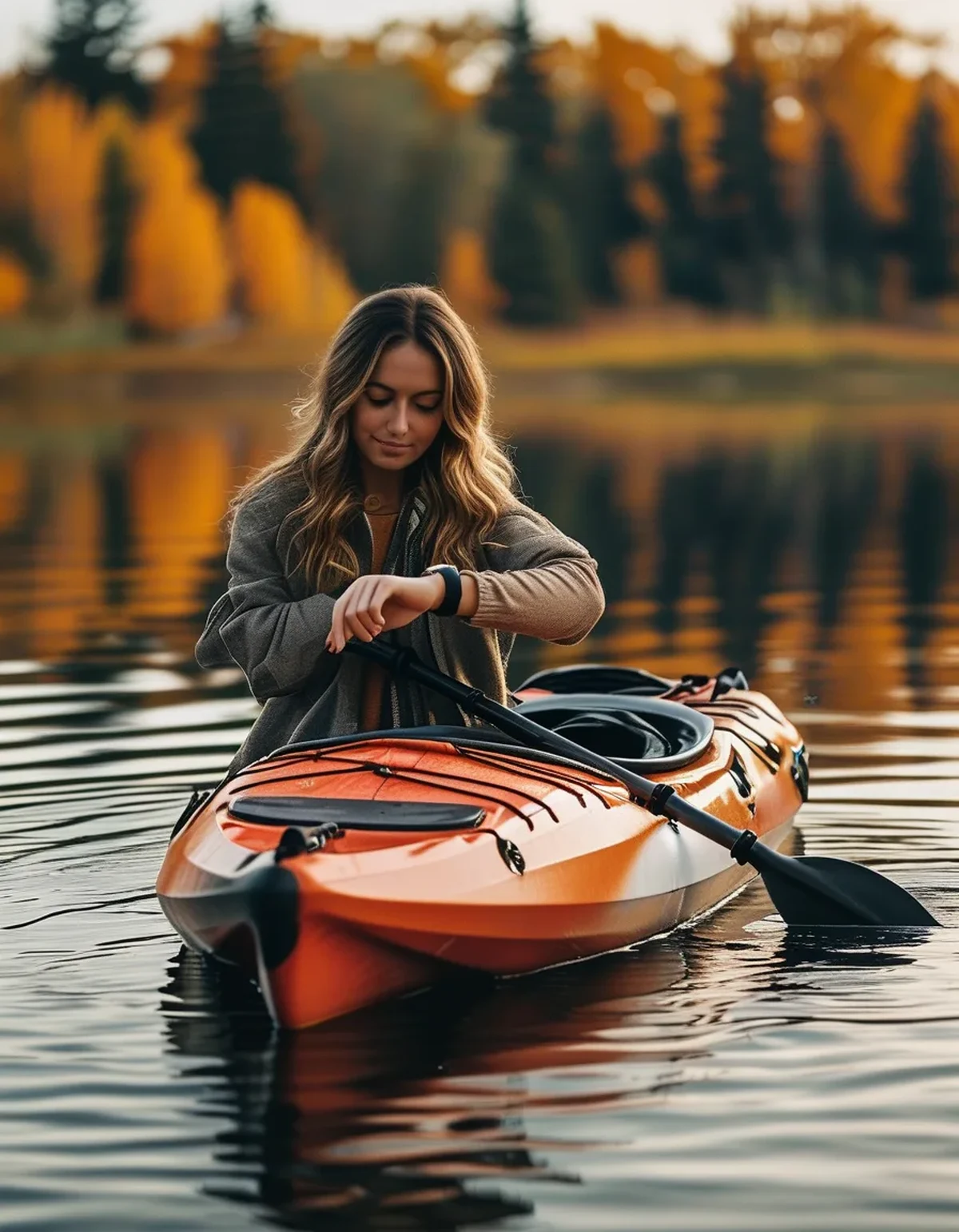
Why does usable light end so much earlier than sunset?
Because sunset is a solar geometry event, not a visibility one, and water conditions eat the margin.
Civil twilight - the period after sunset when there is still enough light for outdoor activity - lasts roughly 20 to 30 minutes at mid latitudes, and it shortens as you move toward winter and lengthens at higher latitudes.
But on the water, usable light ends earlier than the general definition suggests. Several factors compress it:
Water surface glare and reflection reduce your ability to read the surface in low light, which is how you detect obstructions, current lines and boat wake.
Tree-lined banks and valleys cut light substantially earlier. A river in a wooded valley can be functionally dark 20 minutes before an open lake at the same time.
Cloud cover accelerates it considerably. An overcast autumn evening can bring effective darkness close to sunset itself.
And your own dark adaptation is degraded if you have been looking at a phone or a bright screen.
The practical planning number: treat sunset minus 30 minutes as your off-the-water target, not sunset. On rivers, in woodland, or under cloud, make it sunset minus 45.
Also worth knowing: water often looks brighter than the surroundings because it reflects the remaining sky, which creates a false sense of visibility. You can see the water perfectly well and be unable to see the obstruction in it.
How much does daylight actually change week to week?
Enough that a trip planned three weeks ago no longer fits, which is the trap.
Around the equinox in late September, the rate of daylight change is at its maximum - mid latitudes lose roughly two to three minutes per day, which is around 15 to 20 minutes per week.
Over a month that is more than an hour, and the loss is concentrated in the evening in the period before the clocks change, which is exactly when most recreational paddlers go out.
Then the clock change removes another hour at a stroke, which is the single largest discontinuity of the year for anyone with an after-work paddling habit.
The trap is planning from memory. A three hour loop that launched at 4pm and finished comfortably in September finishes in the dark in mid October, and nothing about the route or your speed changed.
Check the actual sunset time for the actual date, every time. Not the time you remember from last month.
And check it for your location, not the nearest city. Sunset varies meaningfully across a region, and a west-facing coast has a later usable light window than an east-facing one at the same latitude.
Practical habit: put the day’s sunset time and your off-water target into your phone before you leave, and set an alarm for the turnaround. The alarm is the part that works - judging elapsed time while paddling is notoriously unreliable.
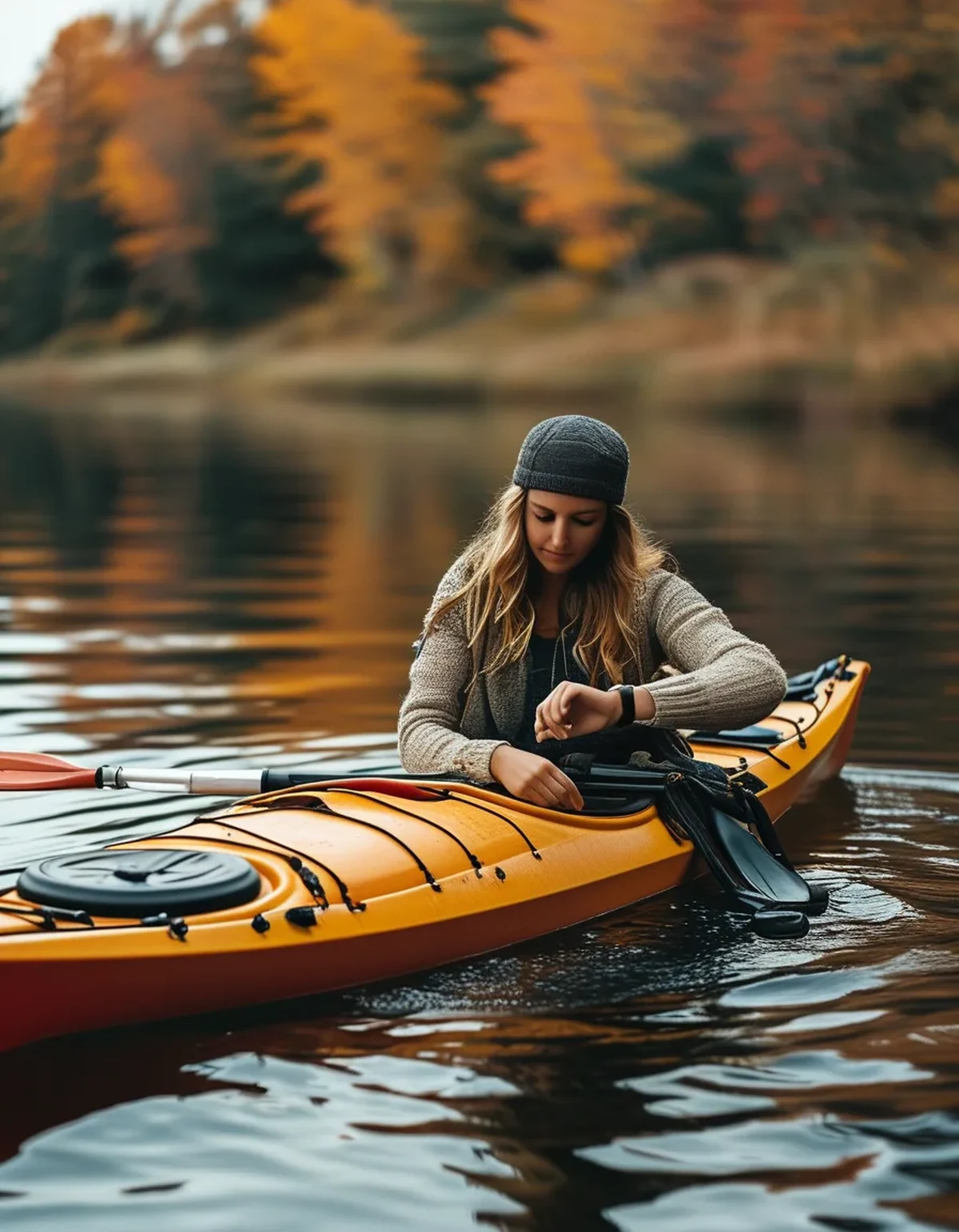
What Nobody Tells You About Autumn Trip Timing
Plan backwards from the turnaround, not forwards from the launch. Decide when you must be off the water, subtract your return leg with a generous buffer, and that is your turnaround time - not a suggestion. Most autumn incidents start with an out-and-back where the outbound leg felt so good that the turnaround slipped by twenty minutes.
The return leg is usually slower. Wind commonly builds through the afternoon, and if you had a tailwind going out, you have a headwind coming back - which can add a very large percentage to your return time. Paddling into a headwind is disproportionately draining and disproportionately slow.
Loading and unloading eat more daylight than paddling does. Car-topping a kayak, changing, and securing gear in the dark in a cold car park is unpleasant and it is where injuries and forgotten equipment happen. Budget 20 to 30 minutes on each end, and count that inside your light window rather than outside it.
Launch sites empty out in autumn. The informal safety of other paddlers being around disappears at the same time the conditions get harder, and some access points and car parks close earlier in the season - worth checking before you find out at 6pm.
Cold water is the reason the margin matters more. A capsize in July with an hour of light left is an inconvenience. The same capsize in October at dusk, in cooling water, is a genuinely serious situation - which is why the autumn buffer should be larger than the summer one, not the same.
What does the autumn plan actually look like?
A shorter route, a hard turnaround, lights on board, and someone who knows the plan.
Shorten the route deliberately. Autumn is the season for the familiar shorter loop, not for the ambitious new stretch. Route familiarity substitutes for visibility in exactly the way it does for running in the dark.
Set a turnaround alarm on your watch or phone and honor it regardless of how good the paddling is.
Carry lights even if you do not plan to be out after dark. A white all-round light is a legal requirement in many jurisdictions for craft on the water after dark, and a headtorch plus a spare is basic. The most common reason paddlers end up in the dark is not a plan to be there.
Dress for immersion, not for the air. This is the central autumn safety principle. Water temperature lags air temperature by weeks, and the relevant question is how long you could function in the water, not how warm the afternoon is. Cold shock is a real risk in water below roughly 60F, and it is what makes an autumn capsize different.
File a plan. Where you are launching, the route, and when you expect to be off. Someone should be expecting you.
Check the wind forecast for the return time, not for the launch time. Afternoon and evening wind behavior in autumn is different from summer, and a forecast checked at 2pm for a 6pm return is the relevant one.
And build in the option to turn back early. A route that lets you cut the loop short at multiple points is worth more in autumn than a scenically better one that commits you.
This is general information rather than formal safety instruction - a local paddlesport safety course covers cold water technique, rescue and self-rescue properly, and autumn is the right time to have done one.
FAQ: Autumn Paddling Daylight Questions, Answered
How much buffer should I actually add to my summer route timing?
A reasonable working approach is to plan the route to finish 45 minutes before sunset, and to treat your summer pace as optimistic. Between a probable headwind on the return, cooler conditions slowing setup and packing, and less willingness to push hard in cold air, most people find their autumn trips take longer than the same route did in July.
Do I legally need lights on a kayak?
Requirements vary by jurisdiction and by water body, but many require at minimum a white light capable of being shown in time to prevent collision when operating between sunset and sunrise. Check your local rules. Practically, carry one regardless - visibility to motorboats is the concern, and a small waterproof all-round light is cheap and weighs almost nothing.
Is it safe to paddle after dark if I know the water well?
With proper preparation, lights, appropriate clothing for immersion, a companion and a filed plan, night paddling is a legitimate activity that many people do. What is not safe is ending up in the dark unintentionally, without lights, dressed for the air rather than the water, and alone. The distinction is preparation, not the darkness itself.
What is the single most important autumn change to make?
Dressing for immersion rather than for air temperature. Water temperature lags air by weeks and keeps falling through autumn, and a capsize is when a comfortable trip becomes a serious one. The daylight planning matters, but if you only change one thing, change what you are wearing.
TL;DR:
- Usable light on the water ends 20 to 30 minutes before sunset - earlier under cloud, on rivers or in wooded valleys.
- Mid latitudes lose 15 to 20 minutes of daylight a week around the equinox, so a route planned last month no longer fits.
- Plan backwards from a hard turnaround time, and set an alarm for it.
- The return leg is usually slower - afternoon wind builds and headwinds cost more than you expect.
- Loading and unloading take 20 to 30 minutes each end and belong inside your light window.
- Carry lights and a headtorch even when you do not plan to be out late.
- Dress for immersion, not for the air. Water lags weeks behind, and that is what makes an autumn capsize serious.
The route did not get longer. The light got shorter, and the water got colder underneath it.
Keep Reading
This article is for general informational and styling purposes only. Fit, sizing, and product availability may vary.