Why Early-Morning Paddling Feels Faster Than Afternoon
Quick Answer: Morning water is faster mostly because of the air above it. Overnight cooling stabilises the atmosphere, which suppresses wind and leaves the surface glassy; by afternoon, thermal heating drives wind and chop that add drag and steal glide. Fresh muscles are a smaller part of the difference than the conditions are.
You paddle the same loop at 7am and 4pm, and the morning version is quicker and easier by a margin that feels disproportionate.
Most paddlers assume this is fatigue. It is mainly meteorology, and understanding it changes how you plan the rest of the season.
Why is the water so much flatter in the morning?
Because the atmosphere is stable overnight and unstable by afternoon.
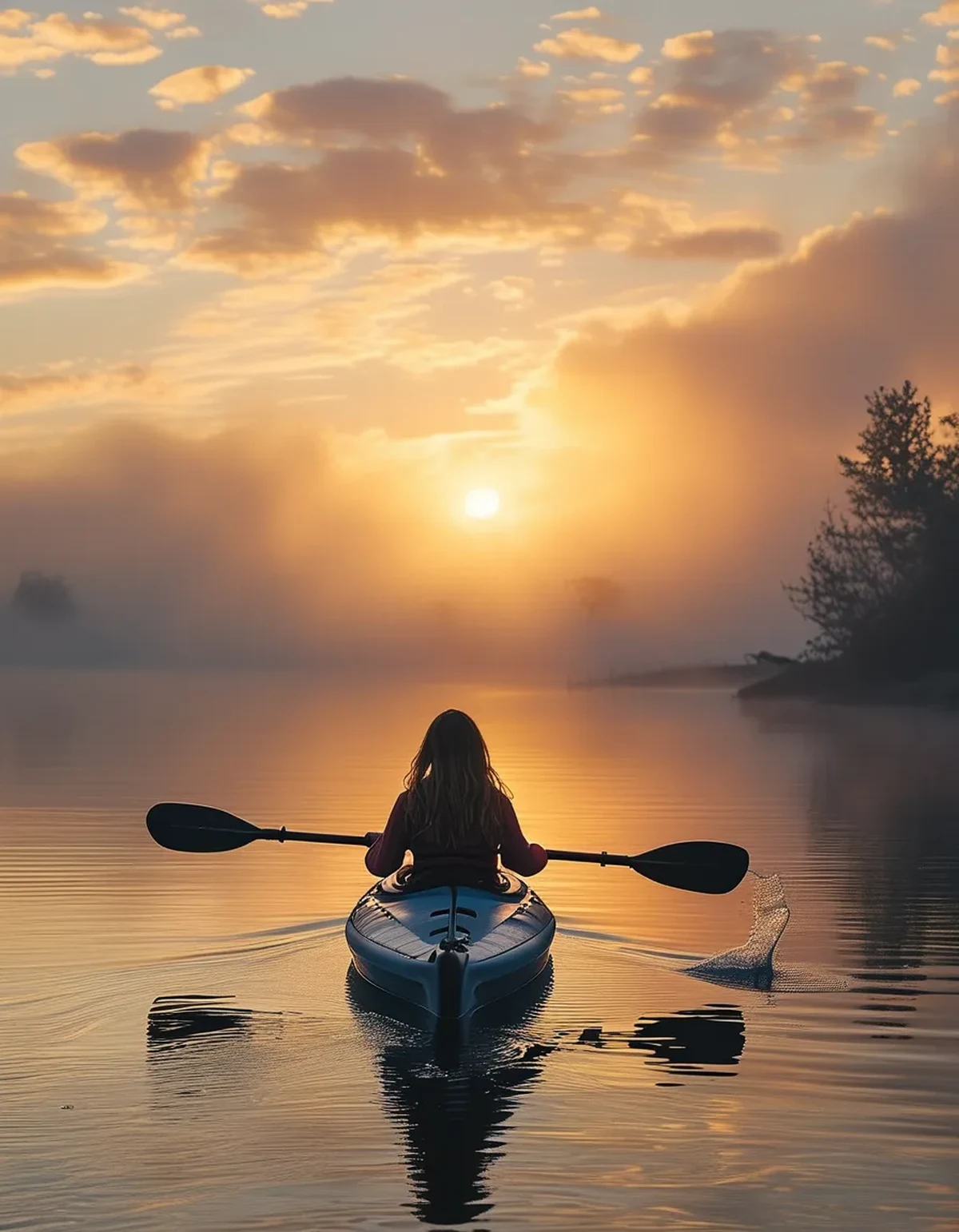
At night the ground and water surface radiate heat and cool. That produces a layer of cool, dense air sitting near the surface, and dense air near the surface resists vertical mixing. Wind aloft cannot mix down to the water, so the surface stays calm regardless of what is happening a few hundred metres up.
Once the sun rises and starts heating the ground, that stable layer breaks down. Warm air rises, air from above mixes down, and the wind you could not feel at dawn arrives at the surface. This is why so many lakes are glass at 6am and choppy by 11am with no change in the forecast wind speed.
Over larger water there is an additional effect. Differential heating between land and water generates a local breeze — typically onshore during the afternoon — that has nothing to do with the regional weather and everything to do with the sun. It is remarkably consistent and it is why afternoon paddling on the same lake so often means a headwind on one leg.
How much speed does chop actually cost?
More than the wave height suggests, because it attacks your glide rather than your power.
A kayak moving through flat water is fighting mostly skin friction and wave-making resistance, both of which are predictable. Chop adds two costs on top. The hull pitches, which repeatedly lifts and drops the bow and converts your forward momentum into vertical motion. And the constant small corrections to stay upright and on line divert energy into stabilising rather than propelling.
The glide phase is where this shows up. On glass, the boat carries between strokes and you can feel it running. In 15 cm of chop it decelerates noticeably between strokes, so your stroke rate creeps up to compensate, and a higher stroke rate at the same speed is simply more work.
There is a psychological compounding effect too. Chop makes the boat feel less stable, and instinctive tension in the torso reduces rotation. Less rotation means a shorter, arm-driven stroke, which is both slower and more fatiguing. The conditions make you paddle worse, and then the worse paddling makes the conditions feel harder.
Does water temperature change anything?
A little directly, and quite a lot indirectly.
Directly, colder water is slightly more viscous, which marginally increases drag — a real but small effect that works against the morning, not for it.
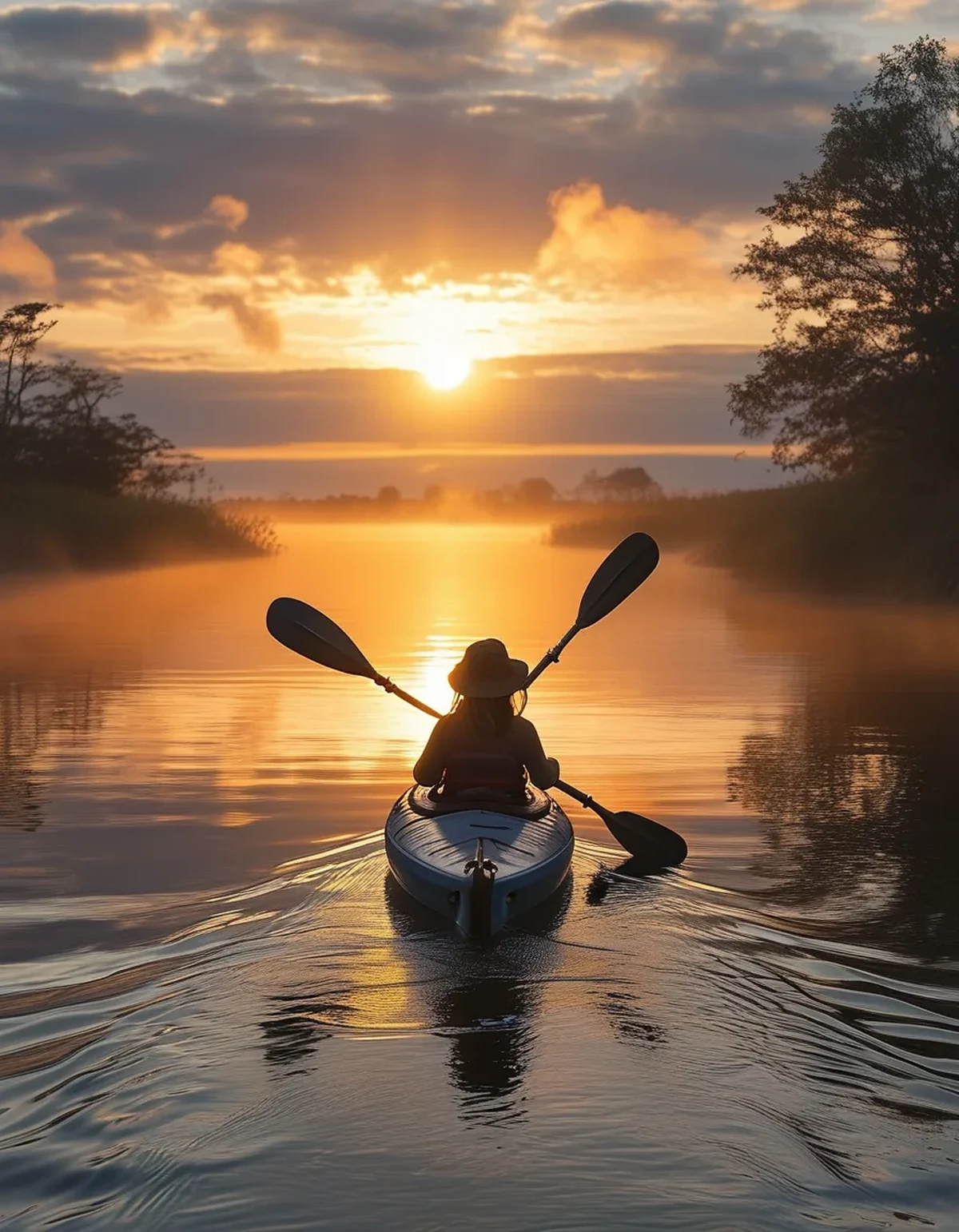
Indirectly is where it matters. In late summer, water holds the heat it accumulated through July and August while air temperatures start dropping overnight. Water warmer than the air above it is an unstable arrangement, and it produces the mist you see at dawn along with, on larger bodies of water, some genuinely localised wind effects.
For most paddlers the practical point is comfort rather than speed. A late-August morning is often the best paddling condition of the entire year: the water is at its warmest, the air is cool enough that you are not overheating, the wind is asleep, and the light is worth the alarm. That combination lasts about six weeks and then it is gone until June.
Myth vs Fact: morning paddling beliefs worth checking
Myth: You are faster in the morning because you are fresh. Fact: Freshness helps, but muscle temperature and reaction speed are actually lower in the early morning, and perceived effort at a given output is higher. The environment is doing most of the work here, not your energy levels.
Myth: Glassy water means no current. Fact: Surface appearance tells you about wind, not flow. Rivers and tidal water can be moving substantially under a perfectly flat surface, which is exactly why the return leg sometimes ambushes people.
Myth: Early starts mean colder water risk is lower. Fact: Air temperature at dawn is at its daily minimum, which matters if you capsize. Late-summer water is forgiving, but a 6am immersion in October is a different situation and deserves proper clothing rather than optimism.
Myth: Afternoon wind always builds. Fact: It builds and then commonly drops again in the last hour before sunset as heating stops and the atmosphere restabilises. That evening window is the second-best condition of the day and is much less crowded than dawn.
How should you plan a paddle around this?
Plan the wind, not the clock, and use the pattern rather than fighting it.
Go out into the wind, come back with it. If the afternoon breeze is going to build, structure the trip so the hard leg happens while conditions are still soft and the tailwind carries you home. Getting this backwards is the classic way a pleasant outing becomes a two-hour grind.
Use dawn for distance, afternoon for skills. Flat morning water is where you build endurance and hold pace. Choppy afternoon water is genuinely good practice for edging, bracing and boat control, which are skills you cannot develop on glass. Treat the conditions as a training menu rather than as good and bad days.
Watch the surface, not the forecast. Approaching cat’s paws — those dark ripple patches moving across the water — are the visible arrival of wind mixing down, and they usually give you five to ten minutes of warning. That is enough to change your plan.
Respect the second window. The hour before sunset in late summer is often nearly as flat as dawn, with warmer air and better light. Bring a light if there is any chance of finishing after dusk; a headlamp and a white stern light are cheap and legally expected in most places once the sun goes.
FAQ: Morning Paddling Questions, Answered
Is fog dangerous or just atmospheric?
Both. Late-summer dawn fog over warm water can reduce visibility to a few boat lengths and it disorients quickly, because there is no horizon to reference. Stay close to shore, carry a compass or phone with a bearing, and be visible to boat traffic.
Why do my times still vary hugely on flat mornings?
Air temperature and humidity affect you more than the boat, and unseen current affects the boat more than you would guess. Comparing times only makes sense on the same route, same direction, similar conditions.
Should I still stretch before a dawn paddle?
Do a proper warm-up rather than static stretching. Five minutes of easy paddling and some torso rotation on the water beats anything you can do on the bank, and cold shoulders on a first hard stroke is a common way to hurt yourself.
Is it worth getting up at 5am for this?
For distance sessions and photographs, genuinely yes. For general enjoyment, the pre-sunset window gives you 80 percent of the conditions with none of the alarm clock, and in late summer it is the most underused hour on the water.
TL;DR:
- Morning water is flat because overnight cooling stabilises the air and prevents wind reaching the surface.
- Chop costs speed mainly by killing your glide and by making you tense up and rotate less.
- Late August is peak conditions — warmest water, coolest air, calmest mornings — and the window is short.
- Plan trips so the headwind leg happens early, and use the hour before sunset as the second flat window.
Next time you paddle, note the time the surface changes. After two or three trips you will be able to predict your own local water within about twenty minutes, and that prediction is worth more than any equipment upgrade.
Keep Reading
This article is for general informational and styling purposes only. Fit, sizing, and product availability may vary.