The Core Strength Kayaking Actually Requires (and How to Build It)
Quick Answer: Efficient kayak strokes generate most of their power from torso rotation, not arm pulling, which means paddlers who only train arm and shoulder strength hit a power ceiling and fatigue faster — targeted rotational core training (not just planks) is what actually improves paddling endurance and speed.
Sore arms after a paddling trip usually mean the technique — and the training — skipped the part doing most of the actual work.
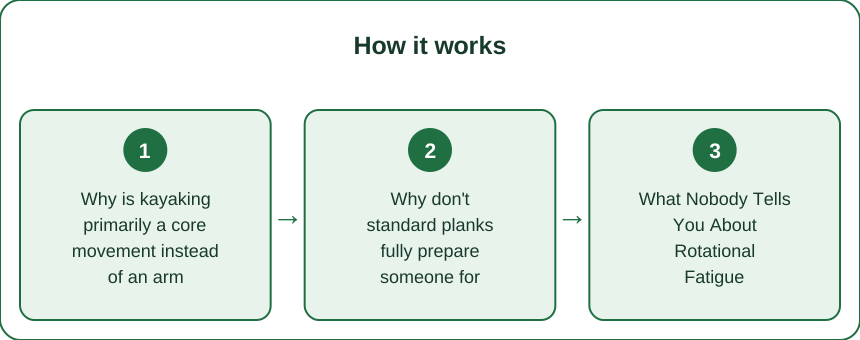
Why is kayaking primarily a core movement instead of an arm movement?
An efficient paddle stroke uses the torso rotating around a stable hip position, with the arms mostly acting as connectors transmitting that rotational force to the paddle — not as the primary force generators.
Paddlers relying mainly on arm strength fatigue quickly because arm and shoulder muscles are simply smaller and less suited to sustained repetitive force than the core and hip musculature involved in proper rotation.
Why don’t standard planks fully prepare someone for paddling demands?
Standard planks train static core bracing, which matters for stability, but paddling specifically requires rotational core strength and endurance — the ability to rotate repeatedly under load for an extended period, which is a different demand than holding a static position.
This is why paddlers who plank regularly can still feel core fatigue and technique breakdown on longer trips — the training didn’t match the actual movement pattern.
What Nobody Tells You About Rotational Fatigue
Here’s what catches paddlers off guard: rotational core fatigue often shows up as reduced stroke power and worsening technique long before it’s consciously felt as ‘core tiredness’ — many people misattribute the resulting slower pace to arm fatigue instead, since the arms are what they’re watching.
Tracking stroke power or pace decline over a session, rather than relying on how tired the core feels, is a more accurate way to notice when rotational endurance is actually the limiter.
What exercises actually build kayak-specific core strength?
- Russian twists and cable/band woodchops — direct rotational strength under load
- Anti-rotation exercises (like Pallof presses) which build the stability that supports controlled rotation rather than sloppy over-rotation
- Standard planks and side planks for the static bracing component, still useful as a complement
- On-water technique practice specifically focused on initiating the stroke from torso rotation, not just strength work off the water
FAQ: Kayak Core Strength Questions, Answered
How many days a week should a paddler do core-specific training?
2-3 sessions per week of rotational and anti-rotation core work is a commonly recommended range alongside regular paddling.
Does core strength training actually translate to more paddling speed?
Yes — since rotation is the primary power source in efficient strokes, improving rotational core strength and endurance directly supports sustained stroke power over a session.
Should beginners focus on core strength or paddling technique first?
Both develop together best — technique work teaches the body to actually use rotation, while core training builds the capacity to sustain that rotation longer; neither alone is optimal.
TL;DR:
- Efficient paddle strokes are powered mainly by torso rotation, not arm pulling
- Standard planks train static bracing, not the rotational endurance paddling actually needs
- Rotational core fatigue often shows up as declining stroke power before it feels like core tiredness
- Rotational exercises like woodchops and anti-rotation work like Pallof presses are the more specific training targets
If your arms are what’s sore after paddling, your core is probably the part that needs the training focus.
Keep Reading
This article is for general informational and styling purposes only. Fit, sizing, and product availability may vary.