Kayak Paddling Technique: How to Paddle Efficiently (and Not Wreck Your Shoulders)
Quick Answer: Proper kayak paddling technique comes from torso rotation, not your arms. Sit upright with feet against the pegs, plant the blade fully at your toes, then unwind your torso to pull the boat past the paddle — arms stay relatively straight. Keep a relaxed grip, exit the stroke at your hip, and your shoulders will thank you after mile three.
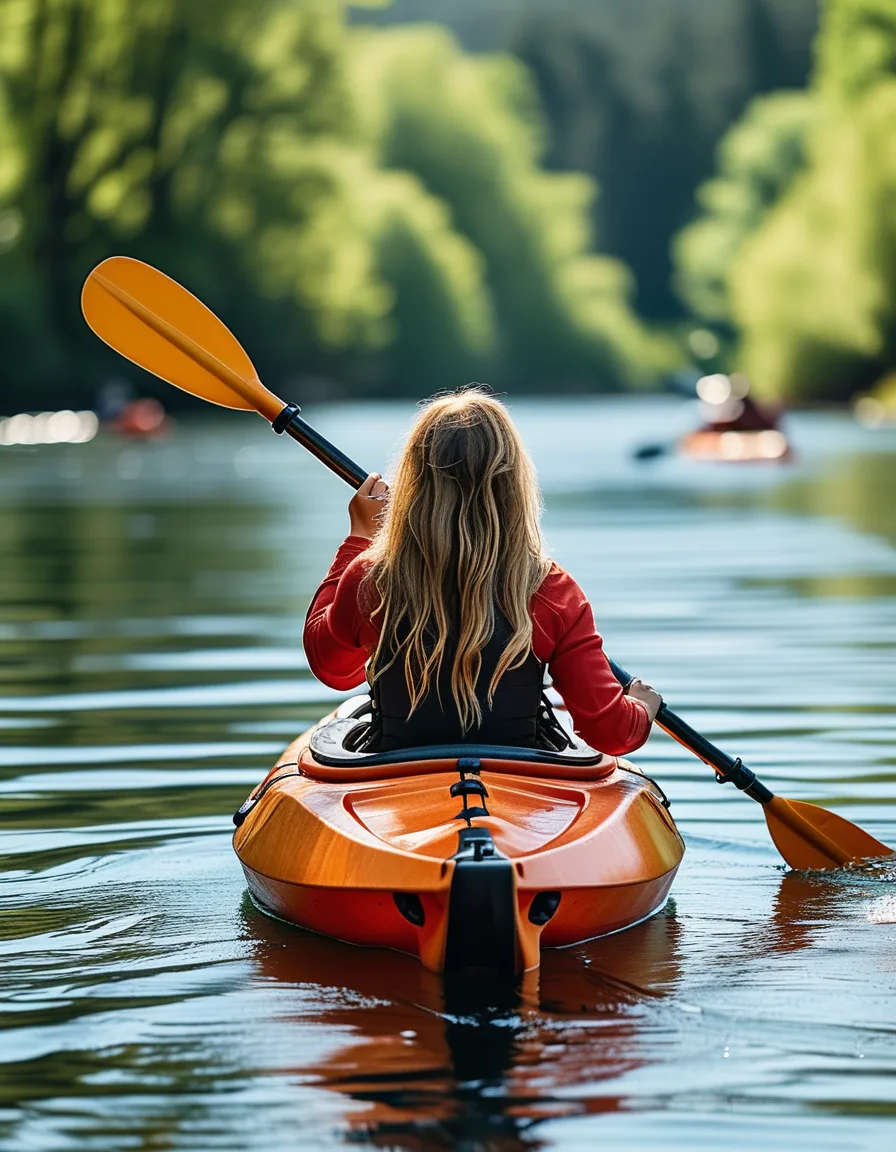
Most beginners paddle a kayak with their arms and shoulders. Two hours later they’re sore, slow, and wondering why everyone else looks so relaxed.
The people who look relaxed are using their torso. It’s the single technique change that turns a shoulder-wrecking slog into a pleasant paddle.
Why Does Paddling Technique Matter So Much?
Your arms are small; your torso is not. Your core and back muscles are far larger and far more fatigue-resistant than your shoulders and biceps. Arms-only paddling burns out the smallest muscles in the chain first.
Shoulders don’t like repeated loaded reaching. The kayaker’s classic injury is a shoulder problem, and it comes from thousands of repetitions of pulling with the arm extended. Torso rotation moves that load onto structures built for it.
Efficiency is the whole game. A well-rotated stroke moves the boat further per stroke with less effort. Over a three-hour paddle, that’s the difference between arriving pleasantly tired and arriving wrecked.
What Is the Correct Forward Stroke?
Set up first.
- Sit upright, not slumped, with your lower back supported and a slight forward lean from the hips.
- Feet against the foot pegs, knees slightly bent and pressed lightly outward against the thigh braces. You’re connected to the boat at three points.
- Hands on the shaft slightly wider than shoulder-width — a good check is holding the paddle overhead with elbows at 90 degrees.
- Relaxed grip. Your top hand can almost open. A death grip on the shaft causes forearm fatigue and does nothing for power.
Then the four phases:
1. The catch. Reach forward with a rotated torso — not by extending your arm — and plant the blade fully in the water beside your toes. The blade should be completely submerged before you apply any power.
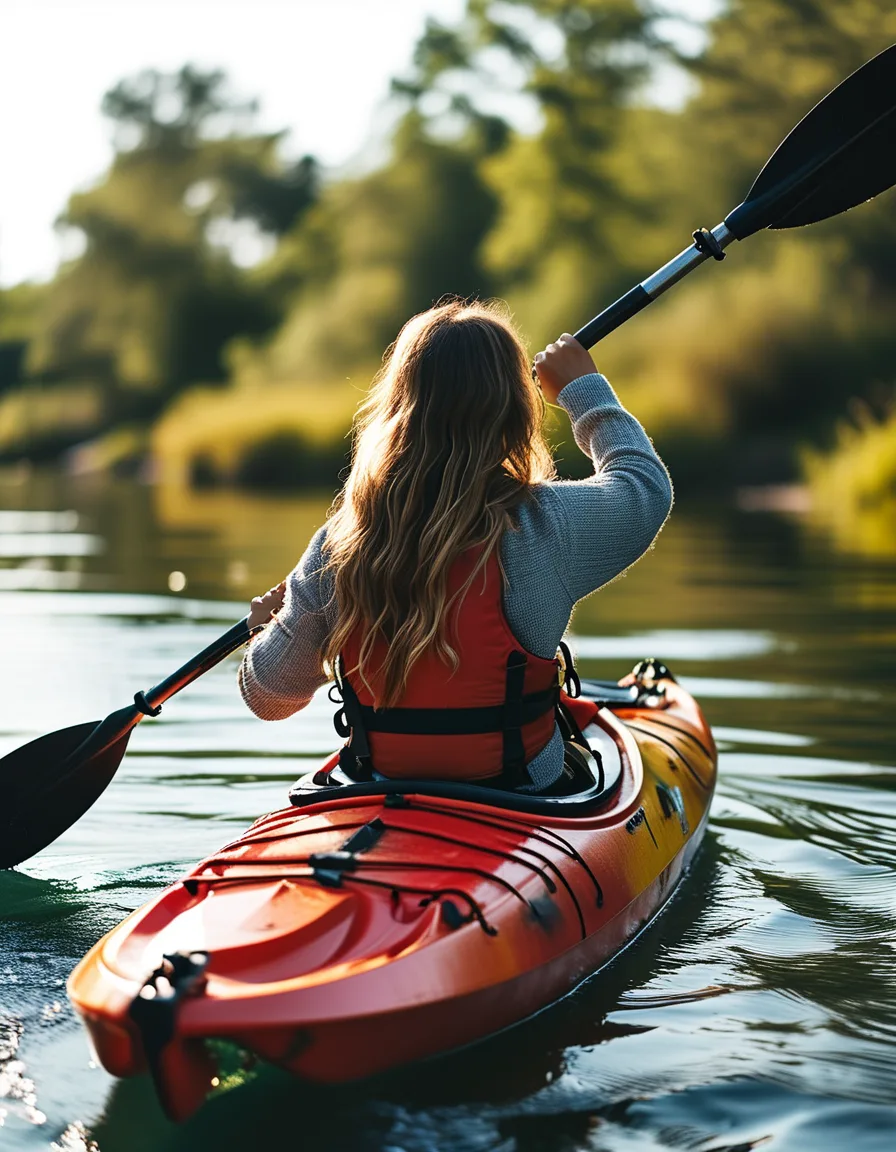
2. The power phase. Unwind your torso. Your arms stay relatively fixed; the rotation of your trunk is what pulls the boat past the paddle. Push with your top hand at about eye level while the bottom hand guides. Press on the same-side foot peg as you pull — power really does start at your feet.
3. The exit. Take the blade out at your hip. Pulling past your hip achieves nothing except lifting water and stressing your shoulder. This is the single most common technical error.
4. The recovery. Relaxed, low, and rotating into the next catch on the other side.
Cadence over force. A relaxed, consistent stroke rate moves a kayak faster than powerful, tiring pulls.
What About Turning and Steering?
The sweep stroke is the primary turn: reach forward, plant the blade near the bow, and sweep a wide arc out to the stern. Sweeping on the right turns the boat left. Lean gently into the turn and edge the boat slightly for a much tighter arc.
The reverse sweep does the opposite — start at the stern and sweep forward — and turns the boat sharply, at the cost of slowing you down.
The draw stroke moves the boat sideways: plant the blade out to the side, parallel to the boat, and pull it toward your hip. Useful for coming alongside a dock.
Edging beats muscling. Tilting the boat with your hips turns it far more effectively than paddling harder. It feels precarious at first and quickly becomes the thing you rely on.
5 Mistakes Everyone Makes
- Pulling with the arms. Rotate the torso. Everything else follows from this.
- Pulling past your hip. Wasted effort, and it’s the most shoulder-unfriendly part of a bad stroke.
- A white-knuckle grip. Relax the top hand almost completely. Forearm burn is a grip problem, not a fitness problem.
- Slumping. A rounded back kills your rotation entirely — you can’t unwind a spine that’s already collapsed. This is the third mistake and it undoes all the others silently.
- Ignoring the foot pegs. They should be adjusted so your legs are lightly engaged. Loose foot pegs mean your power leaks before it reaches the paddle.
How Do You Protect Your Shoulders?
Keep your hands in the box. Imagine a rectangle in front of your chest formed by your arms and the paddle shaft. Keep your hands inside it — never reach a straight arm far behind you or high overhead. Almost every kayaking shoulder injury happens outside that box.
Warm up before launching. Arm circles, torso rotations, and shoulder blade squeezes. Five minutes on the beach.
Build duration gradually. Add roughly 20% per outing rather than jumping from an hour to four. Paddling is a repetitive endurance activity, and tissue adapts on its own schedule.
Condition off the water. Rows, face pulls, and rotational core work carry over directly and protect the shoulders under repetition.
Cover the safety basics. PFD worn, not stowed. Check wind and conditions before launching. Tell someone your plan. Good technique doesn’t help you if the fundamentals are missing.
FAQ
Why do my shoulders hurt after kayaking?
Almost always arms-only paddling combined with pulling the blade past your hip. Both put repeated load on the shoulder at its most vulnerable angles. Rotating the torso and exiting the stroke at the hip resolves it for most people.
How do you paddle a kayak in a straight line?
Equal stroke length and power on both sides, a consistent cadence, and a vertical paddle shaft — a low-angle, sweeping stroke naturally turns the boat. Wind and current also push the bow, so small correction strokes are normal, not a sign of poor technique.
Should the paddle be high-angle or low-angle?
High-angle (a more vertical shaft) is more powerful and suits shorter, faster paddling. Low-angle is more relaxed and better for long touring days. Most recreational paddlers are best served by low-angle, and paddle shape should match the style.
How fast should you paddle?
A relaxed, sustainable cadence beats hard pulls. Most recreational paddlers cruise around 3 mph. If you’re gasping in the first ten minutes, the stroke rate is too high or you’re muscling it with your arms.
TL;DR:
- Power comes from torso rotation, not arms — unwind your trunk to pull the boat past the paddle.
- Sit upright, feet on the pegs, knees lightly braced, grip relaxed.
- Plant the blade fully at your toes; exit at your hip, never past it.
- Push with the top hand at eye level and press the same-side foot peg.
- Keep hands inside the “box” in front of your chest to protect the shoulders.
- Sweep strokes plus boat edging turn far better than paddling harder.
- Warm up, build duration by about 20% per outing, and always wear the PFD.
Keep Reading
This article is for general informational and styling purposes only. Fit, sizing, and product availability may vary.