Why Your Lower Back Hurts After Kayaking (It's Probably the Seat, Not Your Core)
Quick Answer: Lower back pain after kayaking is most often caused by inadequate lumbar support in the seat combined with a slouched paddling posture, not weak core muscles — adding a simple lumbar support cushion and consciously maintaining upright posture typically resolves it faster than core strength training alone.
You finish a kayak trip and your lower back is aching in a way that doesn’t match how the paddling itself felt. You’ve assumed it’s a core strength gap to train away, when the seat and your posture in it are usually doing more of the damage.
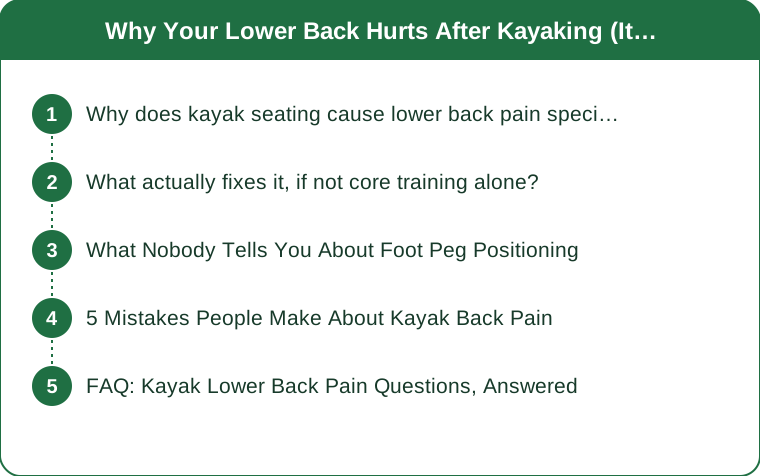
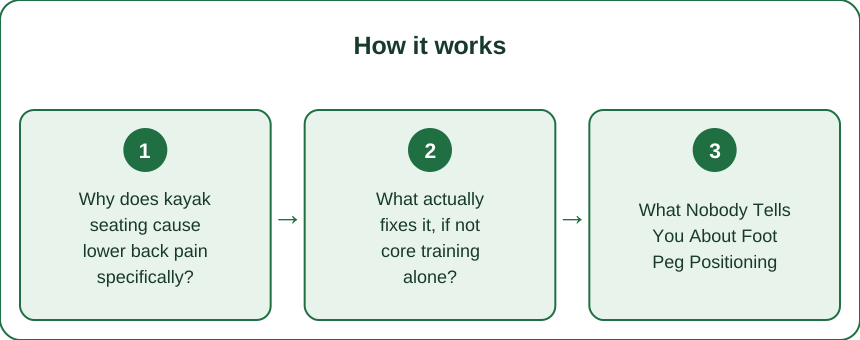
Why does kayak seating cause lower back pain specifically?
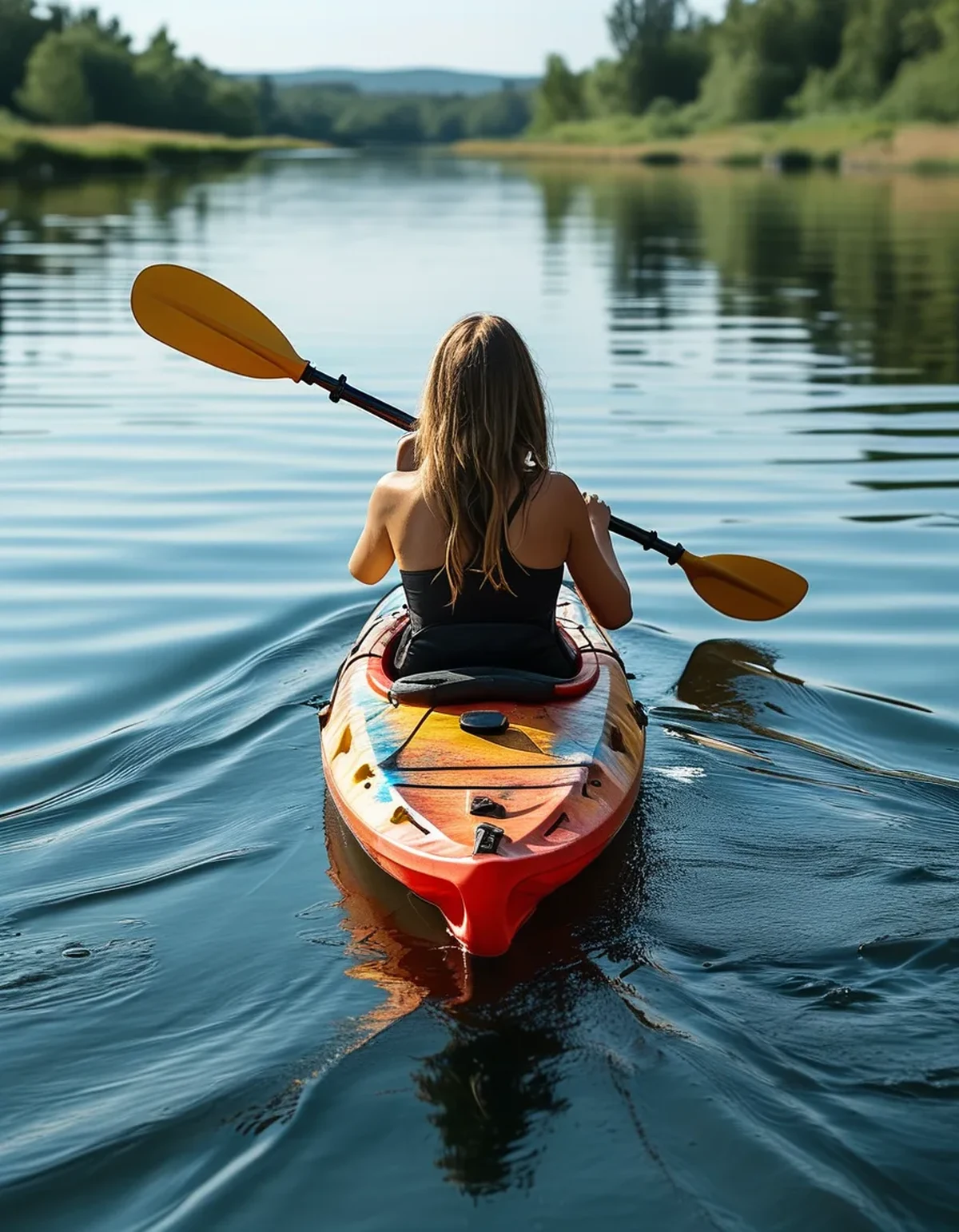
Most stock kayak seats provide minimal lumbar (lower back) support, and the seated, legs-extended-forward paddling position naturally encourages a posterior pelvic tilt — a slight slouch — over an extended session, which flattens the lower back’s natural curve and loads the lumbar discs and muscles unevenly. This posture happens gradually and often isn’t noticed until pain sets in afterward.
Unlike sitting in a normal chair where you can shift position freely, kayak seating is more constrained by the cockpit and foot pegs, meaning small postural problems can’t be self-corrected as easily mid-paddle as they would be in everyday sitting.
What actually fixes it, if not core training alone?
A lumbar support cushion or add-on seat back, positioned to maintain the lower back’s natural inward curve rather than letting it flatten, addresses the root mechanical issue directly and often produces noticeably less pain within the very next outing. Many kayak seats are designed to accept an aftermarket lumbar pad specifically because this is such a common complaint.
Consciously sitting more upright, with shoulders back rather than hunched forward toward the paddle, also reduces the load — this is a posture habit worth practicing even on land before a trip, since it’s easy to slip into a forward hunch once paddling rhythm takes over your attention.

What Nobody Tells You About Foot Peg Positioning
Foot peg distance affects lower back posture more than most paddlers realize — foot pegs set too far away force a more reclined, flattened lower back position to reach them, while pegs set correctly (knees at a comfortable bend, not fully extended) support a more upright, back-friendly seated position. This is a simple, often-overlooked adjustment most kayaks allow but few paddlers actually optimize.
Core strength training is still genuinely useful for overall paddling endurance and power, but it addresses a different problem (rotational power and fatigue resistance) than the specific seat-and-posture mechanism causing most post-paddle lower back pain.
5 Mistakes People Make About Kayak Back Pain
1. Assuming it’s purely a core strength problem and skipping the seat and posture check entirely.
2. Never adjusting foot peg distance from the factory default setting.
3. Slouching forward toward the paddle without noticing it happening gradually.
4. Using a seat pad for comfort but ignoring lumbar-specific support.
5. Pushing through pain on a long trip rather than addressing posture the moment discomfort starts.
FAQ: Kayak Lower Back Pain Questions, Answered
Do all kayaks accept aftermarket lumbar support additions?
Most sit-inside and sit-on-top recreational kayaks do, though it’s worth checking your specific seat’s attachment points before buying an add-on.
How long does it take for a lumbar support fix to show a difference?
Many paddlers notice a difference on the very next trip, since it directly addresses the mechanical cause rather than requiring weeks of conditioning.
Is core strength training still worth doing for kayaking?
Yes — it helps with paddling power and overall fatigue resistance, just not as the primary fix for seat-and-posture-driven lower back pain specifically.
TL;DR:
- Most kayak seats lack real lumbar support, encouraging a gradual slouch over a session
- A lumbar support cushion often fixes pain faster than core training alone
- Foot peg distance affects back posture — adjust it rather than leaving the factory default
- Core training still helps overall paddling, just not as the primary fix for this specific pain.
Keep Reading
This article is for general informational and styling purposes only. Fit, sizing, and product availability may vary.