The Paddle Technique Fix for Shoulder Fatigue That Hits an Hour Into Kayaking
Quick Answer: Most kayak shoulder fatigue comes from paddling with the arms alone instead of rotating the torso to power each stroke — engaging your core and rotating your shoulders and hips together with each paddle stroke shifts the workload to larger muscle groups and dramatically extends how long you can paddle before shoulder fatigue sets in.
The arms feel like the obvious engine. The torso is supposed to be doing most of the actual work.
Why do arms tire out so much faster than the torso in this movement?
Shoulder and arm muscles are relatively small compared to your core and back muscles, and they fatigue proportionally faster under sustained repetitive load — a paddling technique that relies mainly on arm flexion and extension is asking small muscle groups to do a big muscle group’s job, which is why the one-hour mark is such a common fatigue threshold for arm-dominant paddlers.

What does proper torso rotation in paddling actually look like?
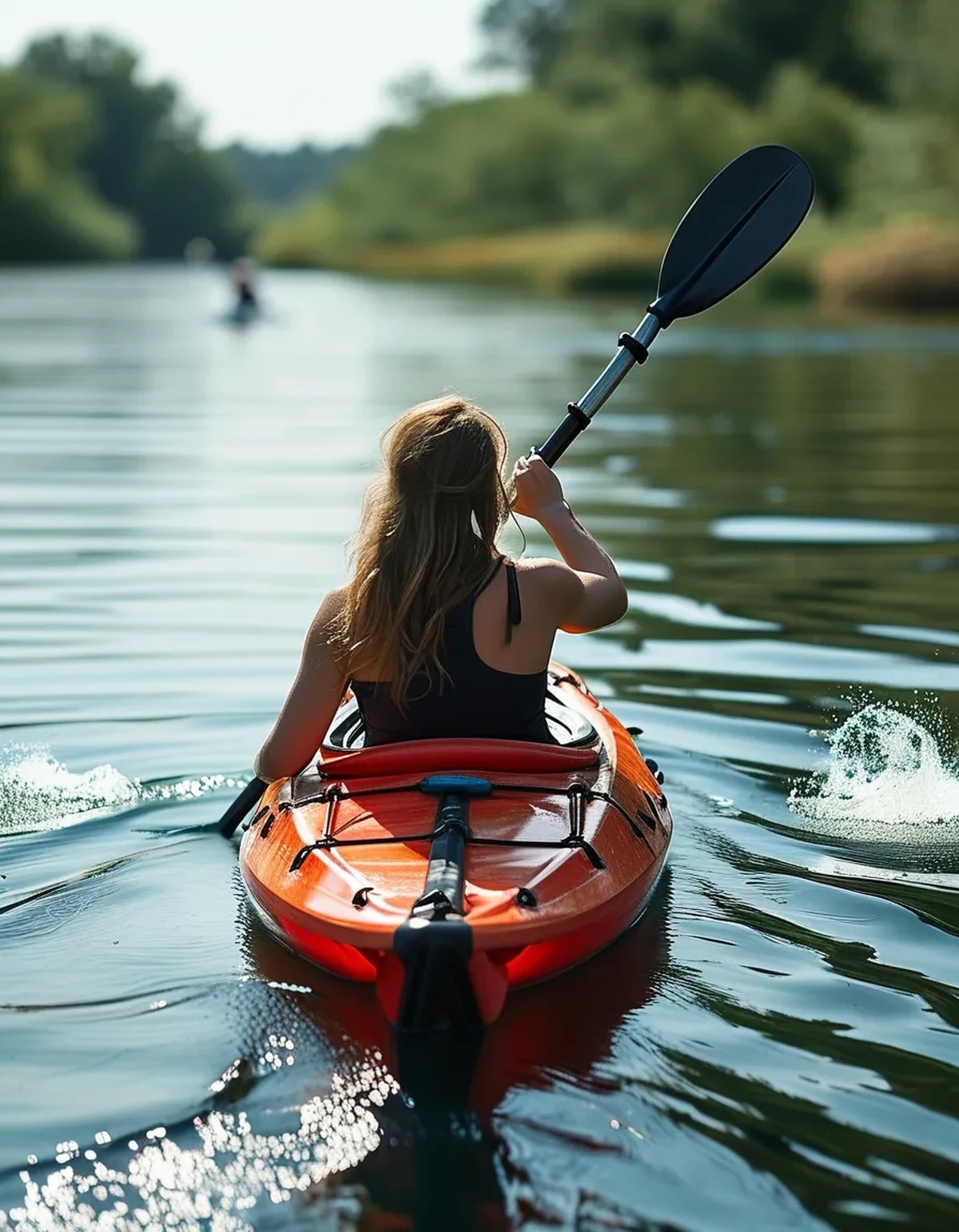
Correct technique rotates the torso with each stroke — as the paddle enters the water on one side, the opposite shoulder rotates forward, engaging obliques and back muscles to drive the stroke, with the arms functioning more as a connection point than the primary power source. Watching from above, a good paddler’s shoulders visibly rotate side to side with each stroke rather than staying square to the boat.
How do you actually retrain this if you’ve been paddling arm-dominant for years?
A useful drill is paddling for short stretches with a deliberately exaggerated torso rotation, almost overcorrecting, to build the muscle memory — most paddlers underestimate how much rotation is actually correct because arm-dominant paddling has become their default. Filming a short clip from the side or having someone watch from shore can reveal whether the rotation is actually happening or just feels like it is.
TL;DR:
- Arm-dominant paddling fatigues small muscle groups fast — usually by the one-hour mark
- Proper technique rotates the torso with each stroke, engaging core and back muscles
- The arms should connect the power, not generate most of it
- Deliberately exaggerated rotation drills help retrain years of arm-dominant habit
Once torso rotation clicks, the one-hour shoulder wall tends to move out significantly, often doubling comfortable paddling time without any change in arm strength.
Keep Reading
This article is for general informational and styling purposes only. Fit, sizing, and product availability may vary.