Why Your Shoulders Burn Out Halfway Through a Paddle — and the Technique Fix
Quick Answer: Shoulder burnout during kayaking usually comes from paddling with the arms instead of rotating the torso — shifting the power source to your core and back muscles fixes most early fatigue without needing more upper-body conditioning.
Half an hour in, shoulders on fire, and the trip’s barely started. It feels like a fitness problem. It’s almost always a technique problem.
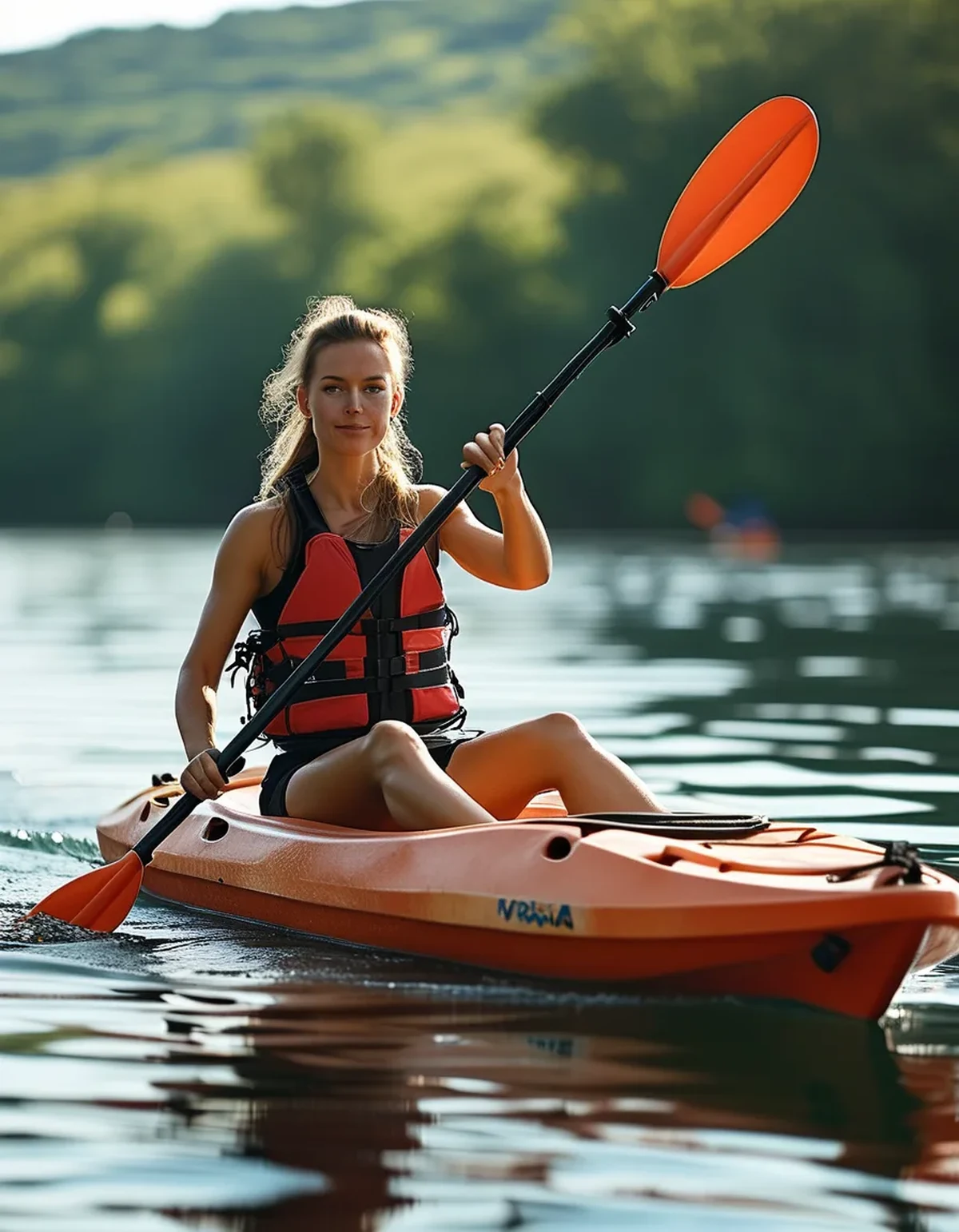
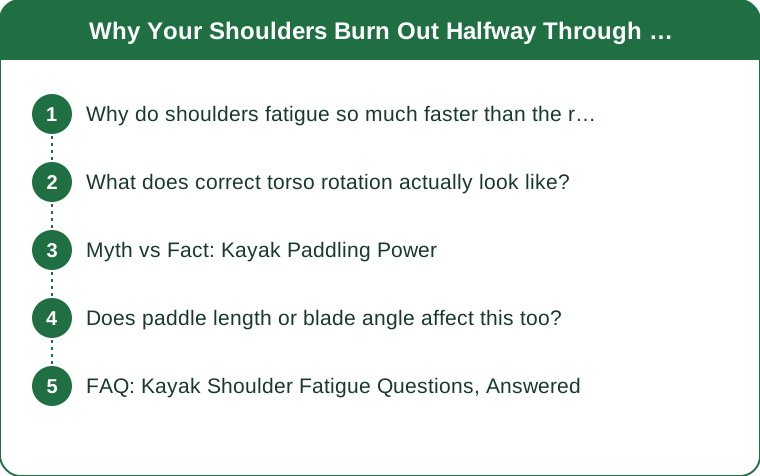
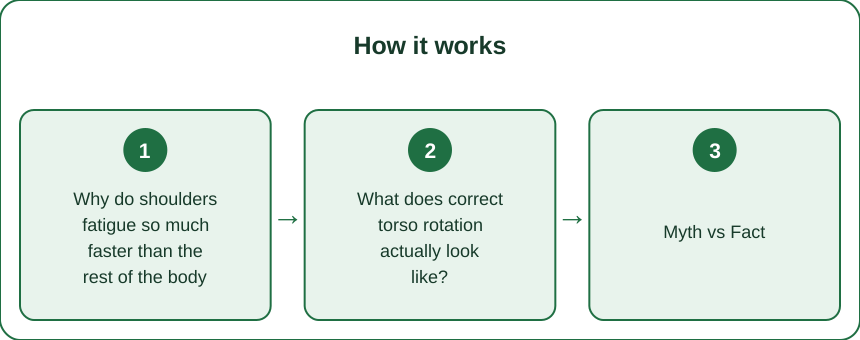
Why do shoulders fatigue so much faster than the rest of the body while kayaking?
Because most beginner paddlers generate power almost entirely from the arms and shoulders, small muscle groups that fatigue quickly under repetitive load, instead of using the much larger torso and back muscles available.
Efficient paddling technique treats the arms mainly as a connection point transmitting force from torso rotation, not as the primary engine — when that rotation is missing, the shoulders absorb work they weren’t built to sustain for hours.
What does correct torso rotation actually look like?
Rotating the torso so the shoulder driving the stroke moves forward with the paddle, rather than just reaching the arm forward, engages the core and back muscles that have far more endurance capacity than shoulders alone.
A simple check: if your belly button isn’t turning slightly with each stroke, you’re likely arm-paddling rather than rotating, which is the single most common technique gap for new paddlers.

Myth vs Fact: Kayak Paddling Power
Myth: Stronger arms and shoulders are the fix for paddling fatigue. Fact: better torso rotation typically resolves fatigue faster than arm strength training, since the issue is usually which muscles are doing the work, not how strong those muscles are.
Myth: A tighter grip on the paddle shaft gives more control. Fact: an overly tight grip fatigues the forearms and reduces feel for the water, while a relaxed grip with the rotation doing the work is both more efficient and less tiring.
Does paddle length or blade angle affect this too?
A paddle that’s too long for your torso height forces more shoulder reach per stroke, compounding the arm-dominant pattern — getting properly sized gear matters as much as the technique itself.
Feathered blade angles (where the two blades sit at an offset) can also reduce wind resistance on the recovery side, indirectly reducing the total work the shoulders do across a long paddle.
FAQ: Kayak Shoulder Fatigue Questions, Answered
How long does it take to unlearn arm-dominant paddling?
Most paddlers notice a difference within a few sessions of deliberately focusing on torso rotation, though it takes longer to become automatic.
Should I stretch my shoulders before paddling?
A brief dynamic warm-up of the shoulders and torso helps, but it won’t fix fatigue caused by technique alone — rotation is the bigger lever.
Is shoulder fatigue a sign I need a lighter paddle?
It can help marginally, but a heavier paddle used with good rotation typically causes less fatigue than a light paddle used with arm-dominant technique.
TL;DR:
- Shoulder burnout during kayaking is usually a technique issue, not a conditioning gap
- Torso rotation should generate most of the power, with arms as a connection point
- A properly sized paddle reduces unnecessary shoulder reach per stroke
- Focused practice on rotation resolves fatigue faster than arm strength training alone
Next time out, watch your belly button, not your arms — if it’s not turning with each stroke, that’s the fix to work on first.
Keep Reading
This article is for general informational and styling purposes only. Fit, sizing, and product availability may vary.