Why Your Shoulders Are Wrecked After One Kayak Trip (It's Not Your Arms' Fault)
Quick Answer: Severe shoulder soreness after kayaking is usually a technique problem — paddling with arms alone instead of rotating your torso — not a strength deficit. Learning torso rotation distributes the work to your bigger core and back muscles, dramatically reducing shoulder strain.
You expected to be a little sore. You did not expect your shoulders to feel wrecked for three days after what felt like a leisurely paddle. That specific kind of soreness has a well-known cause among instructors, and it’s fixable with technique, not more gym time.
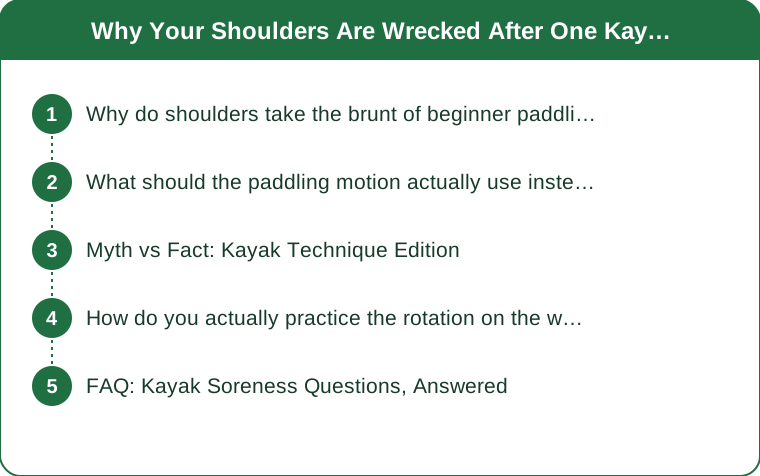
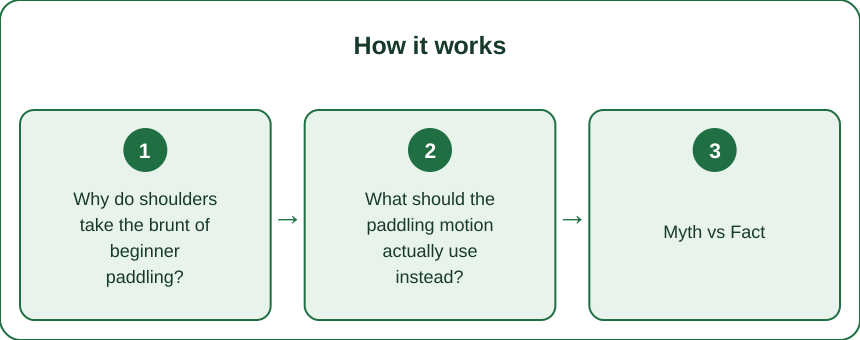
Why do shoulders take the brunt of beginner paddling?
Beginners naturally paddle with just their arms, treating the stroke like a rowing-machine pull with the shoulders and biceps doing all the work. This overloads relatively small shoulder muscles with a repetitive motion they’re not built to sustain for an hour-plus outing.
What should the paddling motion actually use instead?
Torso rotation — the power should come from rotating your core and reaching with a straighter arm, using your bigger back and oblique muscles rather than isolated arm pulling. Instructors often describe it as ‘punching the far hand forward and rotating’ rather than ‘pulling the near hand back.‘

Myth vs Fact: Kayak Technique Edition
Myth: Stronger arms mean less kayak soreness. Fact: Technique change (torso rotation) reduces shoulder strain far more than arm strength gains — even strong-armed beginners get wrecked shoulders with arm-only technique.
Myth: A tighter grip means better control. Fact: An overly tight grip on the paddle shaft fatigues forearms fast and doesn’t improve control — a relaxed grip with rotation does more of the actual work.
Myth: Soreness location doesn’t reveal technique problems. Fact: Shoulder-dominant soreness specifically points to arm-only paddling; more balanced soreness across back, obliques, and shoulders suggests rotation is already happening correctly.
How do you actually practice the rotation on the water?
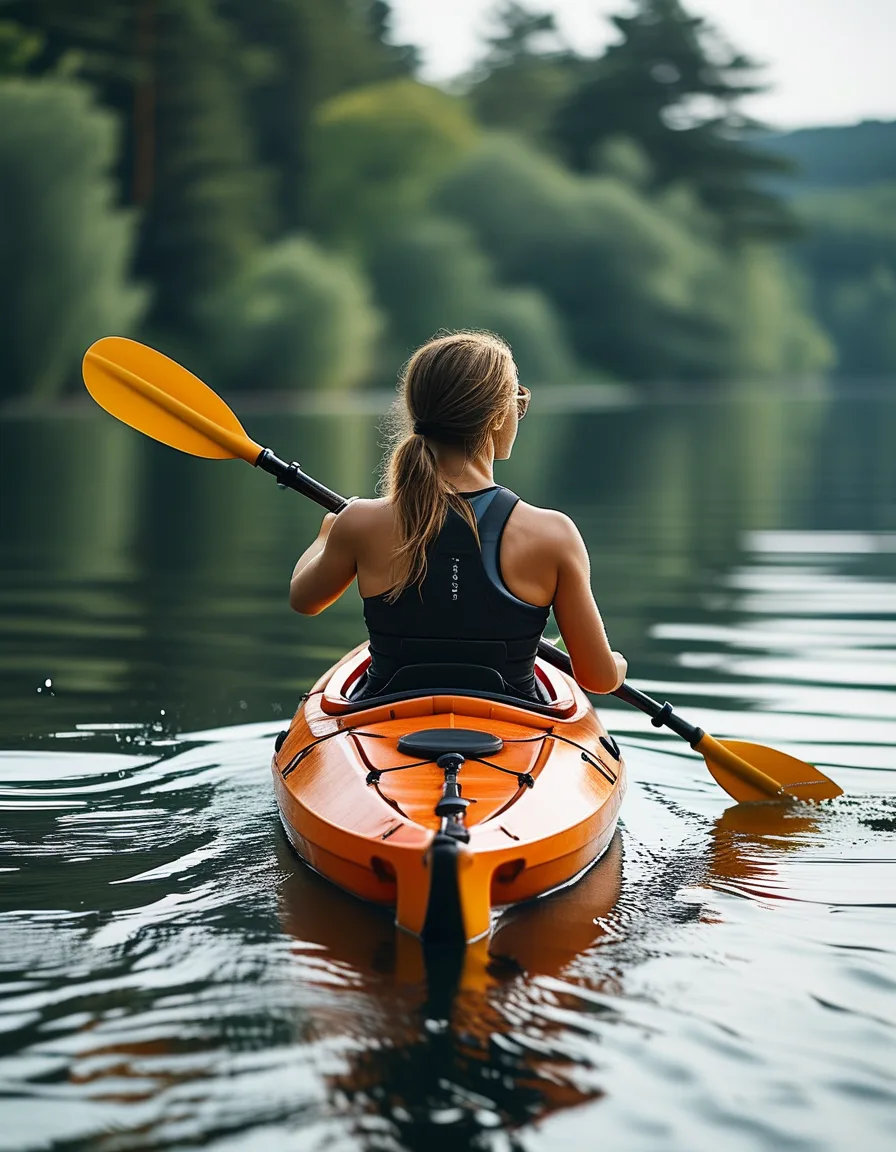
Focus on rotating your whole torso toward each paddle side, letting your hips and core lead the motion rather than just swinging your arms. A useful cue: keep your top arm relatively straight and ‘punch’ it forward across the boat rather than bending and pulling with the bicep.
FAQ: Kayak Soreness Questions, Answered
How long does it take to learn proper paddling rotation?
Most paddlers notice a meaningful shift within 2-3 outings of consciously focusing on torso rotation rather than arm pulling.
Should beginners take a lesson or just self-teach?
A single beginner lesson focused on stroke technique pays off disproportionately — it’s often the fastest way to avoid building the arm-dominant habit in the first place.
Is some shoulder soreness after kayaking still normal?
Mild, general soreness across shoulders and back is normal for a new activity; sharp, isolated shoulder pain that lingers for days points more specifically toward an arm-dominant technique issue worth correcting.
TL;DR:
- Wrecked shoulders after kayaking usually mean arm-only paddling technique, not weak arms
- The power should come from torso rotation, not isolated shoulder and bicep pulling
- A relaxed grip with rotation beats a tight grip with arm strength alone
- A single beginner lesson on stroke technique often fixes this faster than more gym time
Keep Reading
This article is for general informational and styling purposes only. Fit, sizing, and product availability may vary.