Paddling Into Fall: What Actually Changes on the Water
Quick Answer: In early autumn, water temperature lags air temperature by several weeks - the water is still relatively warm while mornings turn cold, and then it drops sharply through October just as people stop dressing for immersion. The changes that matter are shorter daylight, stronger and gustier winds, colder mornings, and fewer people on the water. Dress for the water temperature rather than the air, carry a light, and shorten your planned distances by about 20 to 25% to account for earlier darkness.
Autumn paddling is genuinely some of the best of the year. It is also where the year’s avoidable incidents cluster.
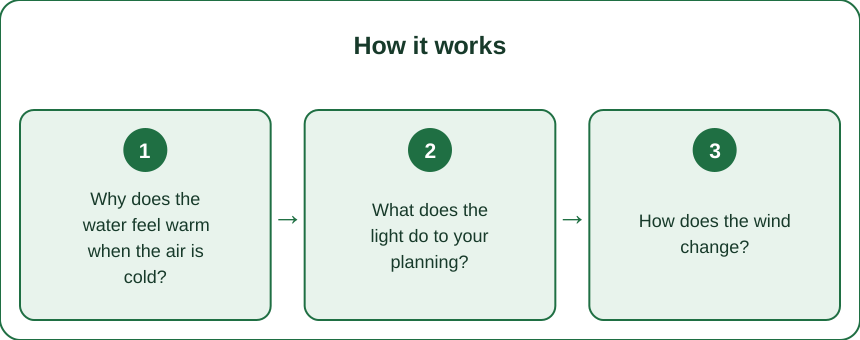
Why does the water feel warm when the air is cold?
Because water has an enormous heat capacity and releases it slowly.
Large bodies of water lag air temperature by weeks. A lake that reached its peak in August is still holding much of that warmth in mid-September, even after a run of cold mornings. Rivers respond faster; large lakes and the sea are the slowest of all.
Then the trend reverses hard. Through October, water temperature falls steadily while air temperature fluctuates. By late October the relationship has inverted - the water is colder than it feels from the bank on a mild afternoon.
This creates the classic autumn misjudgement. A pleasant 20°C afternoon invites shorts and a t-shirt, while the water underneath is at 14°C or lower. Cold water shock is a genuine risk below roughly 15°C, and it is what turns a routine capsize into an emergency.
The rule that experienced paddlers follow: dress for the water, not the air. If you would not swim in it comfortably in what you are wearing, you are not dressed for immersion.
Check the actual water temperature rather than estimating. Many rivers and lakes have published readings, and a cheap thermometer clipped to your deck line answers the question directly.
What does the light do to your planning?
It shortens the day at both ends, faster than most people account for.
Daylight is contracting by roughly 2 to 3 minutes a day at mid-latitudes through September and October. Across a month that is over an hour, and across the season it reshapes what is possible after work entirely.
Dusk arrives faster on the water. Low sun behind trees or hills makes a river genuinely dark well before official sunset, and judging distance and obstacles becomes much harder in that flat light.
Plan to be off the water 60 minutes before sunset, not at sunset. Reduce your usual distance by about 20 to 25% for the same reason - autumn paddles that start at the usual time end in the dark surprisingly often.
Carry a light regardless. A white light visible in all directions is a legal requirement in many places after dark and a sensible one everywhere. A head torch in a dry bag is the minimum, and it weighs nothing.
Morning fog is the other light issue. Autumn mornings on warm water in cold air produce fog that can reduce visibility to a few metres with little warning. If you cannot see the far bank, do not cross to it.
How does the wind change?
It gets stronger, gustier, and less predictable, and it interacts with cooler water.
Autumn brings more frequent frontal systems, which means wind that changes direction and strength within a single session rather than building predictably through the day.
Gusts matter more than average wind speed for a kayak. A forecast average of 10 knots with gusts to 25 is a different day from a steady 15, and the forecast average is what most people read.
Fetch is the variable people forget. Wind over a long unobstructed stretch of water builds meaningfully larger waves than the same wind over a short one. The sheltered end of a lake and the exposed end can be genuinely different conditions.
Plan into the wind first. Paddling out against it and returning with it means the tired half of your trip is the assisted half. This is the single most useful planning habit in windy seasons, and it is worth reorganising a route for.
Watch for offshore wind specifically. It creates deceptively flat water near the launch and much rougher conditions further out, and it pushes anyone who capsizes away from shore. Flat water at the bank is not evidence of a calm lake.
What should you actually wear and carry?
The layering system changes, and two items become non-negotiable.
Base layer: synthetic or merino, never cotton. Cotton holds water against the skin and accelerates heat loss dramatically. This matters far more in September than it did in July.
Mid layer: fleece or a light insulating layer, chosen so you can remove it while afloat if you overheat.
Outer layer: a paddling jacket that blocks wind and spray. Wind chill on wet skin is the main cooling mechanism on a cool day, and a windproof shell addresses it more effectively than adding warmth underneath.
Once water drops below about 15°C, a wetsuit or drysuit stops being optional for anything beyond very sheltered water close to shore. This is the specific decision people put off, usually until an unpleasant experience makes it for them.
Extremities lose heat fastest. Neoprene gloves or pogies, a warm hat under the helmet if you wear one, and neoprene boots. Hands are what fail first, and cold hands mean a compromised grip and a slower rescue.
In the dry bag: a full change of clothes, a warm hat, an emergency shelter or bothy bag, a hot drink in a flask, and a means of calling for help. The flask sounds indulgent and is genuinely useful for treating early cold exposure.
And tell someone your plan. Autumn water is emptier - the casual traffic that would have spotted a problem in July is simply not there. A message with your launch point, route, and expected return time is the cheapest safety equipment available.
FAQ: Autumn Paddling Questions, Answered
When should I start wearing a wetsuit?
The common guidance is when water temperature drops below about 15°C, and certainly below 12°C. Consider the combined air and water temperature too - a widely used rule of thumb is that if air plus water in Celsius totals less than about 30, dress for immersion.
Is autumn paddling more dangerous than summer?
The conditions are more demanding and there are fewer people around, but the actual risk is mostly about preparation. Paddlers who dress for the water, shorten their trips, and carry a light have an excellent season.
How do I judge whether the wind is too strong?
For most recreational paddlers, sustained winds above about 15 knots on open water are challenging, and gusts are what create problems. Check gust forecasts rather than averages, and choose sheltered water on marginal days.
What is cold water shock exactly?
An involuntary gasp reflex and rapid breathing on sudden immersion in cold water, which can cause inhalation of water and panic. It is most dangerous in the first minute, which is why immersion clothing matters more than swimming ability.
Do I need different gear for autumn or just more of it?
Mostly the same system with an added focus on immersion protection and windproofing, plus a light and a proper dry bag. The one genuinely new purchase for many people is a wetsuit or drysuit.
This is general safety information, not a substitute for formal paddlesport instruction. Consider a local safety and rescue course before the colder months.
TL;DR:
- Water temperature lags air temperature by weeks, then drops sharply in October - dress for the water, not the afternoon sunshine.
- Daylight shortens by 2 to 3 minutes a day: aim to be off the water an hour before sunset and cut planned distance by 20 to 25%.
- Autumn wind is gustier and less predictable - read gust forecasts, respect fetch, and paddle into the wind first.
- No cotton, windproof outer layer, immersion protection below 15°C, warm hands, a light, a dry bag with a full change, and a float plan.
The payoff is real: still water, autumn colour on the banks, no crowds, and some of the best light of the year. It just asks for a slightly different set of decisions than the ones that worked in July - made before you launch, rather than in the water.
Keep Reading
This article is for general informational and styling purposes only. Fit, sizing, and product availability may vary.