Why Your Paddle Feather Angle Suddenly Matters in Wind
Quick Answer: Feathering — offsetting the two blades so they are not in the same plane — exists mainly to reduce wind resistance on the blade that is out of the water. In calm conditions it makes little practical difference, which is why most paddlers never think about it. In a headwind, an unfeathered blade acts as a sail on every stroke, and that is when the angle suddenly becomes obvious. A moderate offset of roughly 30 to 45 degrees suits most recreational paddlers.
All summer: calm lake, no problem, never touched the ferrule.
Today: headwind, and the raised blade is catching air on every single stroke.
Here is what feather actually does, and how to decide what you want.
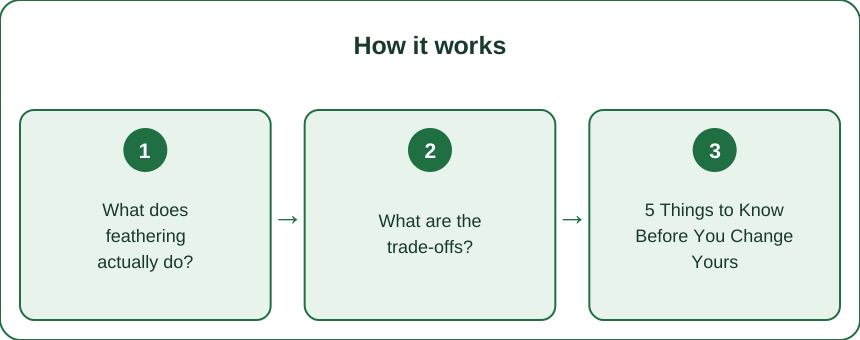
What does feathering actually do?
It changes the orientation of the blade that is not in the water, which is the only place wind matters.
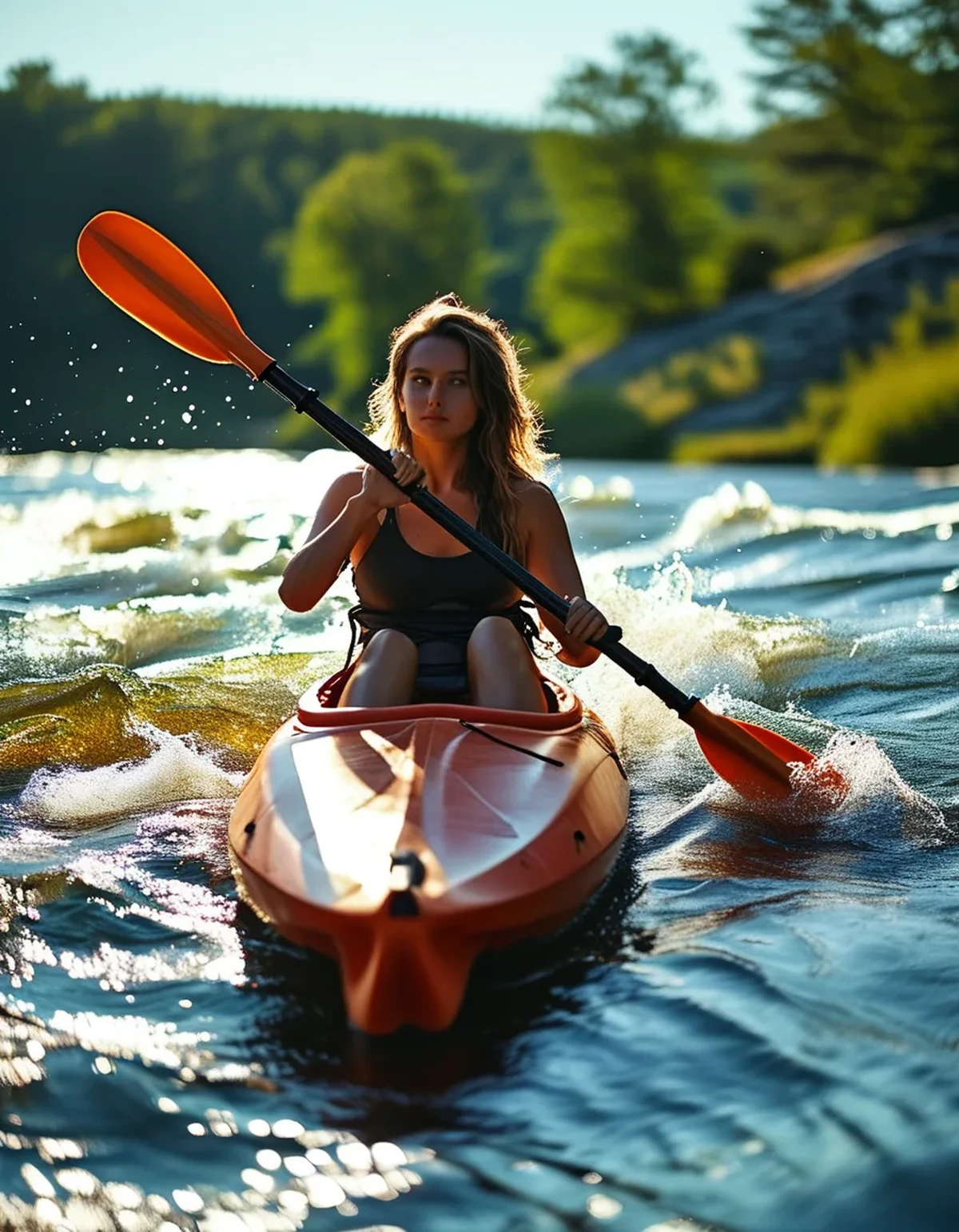
An unfeathered paddle has both blades in the same plane. When one blade is in the water, the other is held up, face-on to whatever wind exists. In a headwind, that face-on blade is a small sail pushing against you on every stroke.
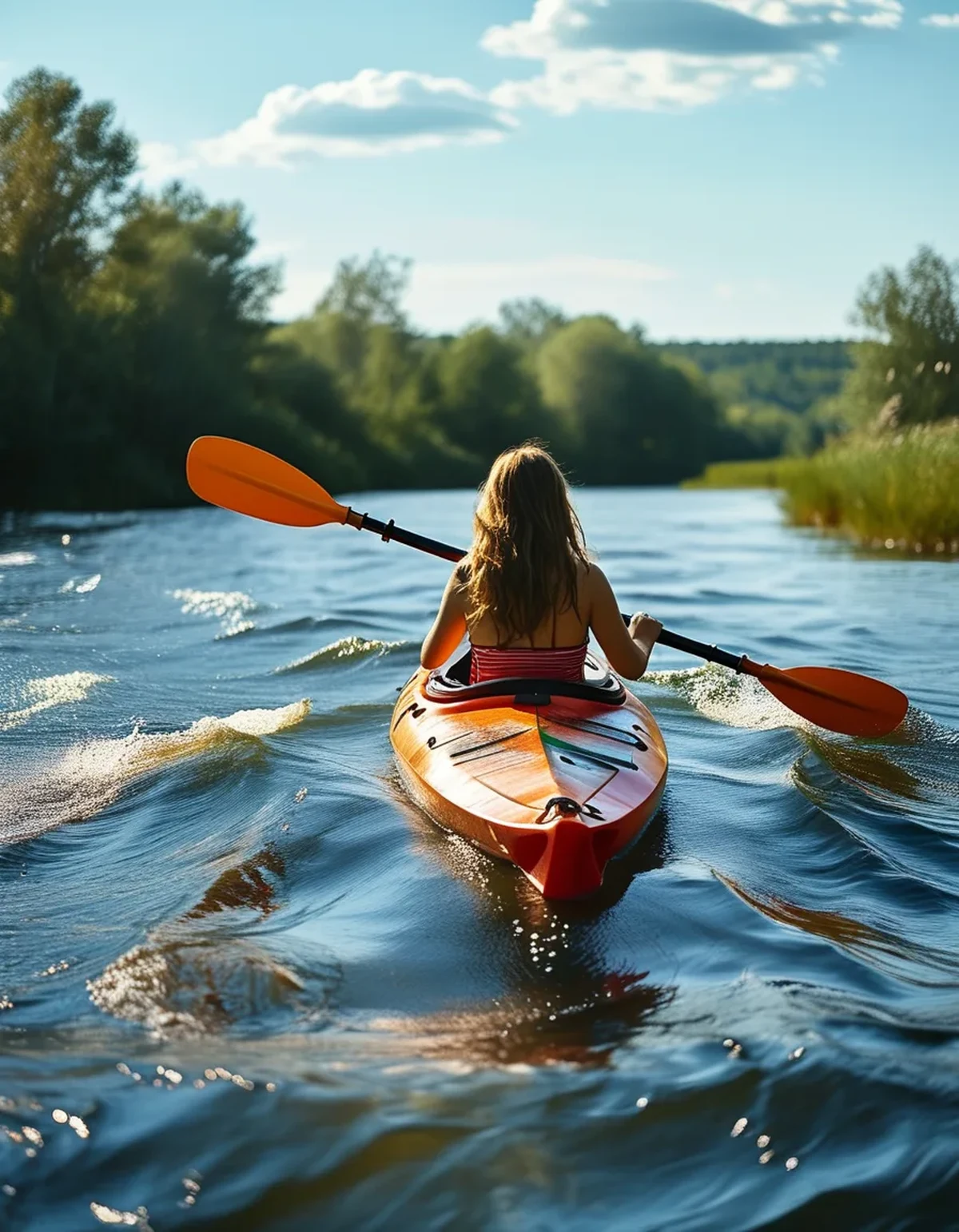
A feathered paddle offsets the blades, so the raised blade slices edge-on into the wind instead of presenting its face. The reduction in resistance is small per stroke and meaningful across a few thousand strokes.
This is the original and main justification. Historical accounts of feathering trace it directly to wind resistance, and it remains the most defensible reason.
The effect scales with wind speed and paddling duration. On a calm day over an hour, feathering is close to irrelevant. Into a stiff headwind over a long crossing, it is genuinely noticeable.
Crosswinds complicate it. A feathered blade in a crosswind can catch air in a different way, and some paddlers find high feather angles get grabbed by side gusts. This is one reason very high angles have fallen out of favour.
What are the trade-offs?
Feathering solves a wind problem and creates a wrist problem, and the balance is personal.
Feathering requires wrist rotation. With a feathered paddle, one hand — the control hand — must rotate the shaft between strokes so each blade enters the water square. That rotation, repeated thousands of times, is a genuine consideration for wrist health.
High feather angles increase the rotation demand. Older paddles were often set at 75 or 90 degrees, which requires substantial wrist movement. Modern practice has largely moved to lower angles — commonly 30 to 45 degrees — precisely to reduce that strain.
Unfeathered paddles require no rotation at all, which is why many recreational paddlers, and paddlers with wrist problems, prefer zero feather. Both blades enter square with no adjustment.
Loose grip matters more than the angle. Much wrist discomfort attributed to feathering actually comes from gripping the shaft too tightly and forcing rotation with the wrist rather than letting the shaft turn in a relaxed hand. Fixing the grip resolves more problems than changing the angle.
Rolling and bracing are affected. For paddlers who roll, a consistent feather angle is part of muscle memory, and switching frequently makes those skills less automatic. This matters far less for flatwater recreational paddling.
Whitewater and sea kayaking traditions differ, and neither is universally correct. Preference varies widely among experienced paddlers, which is itself a good indication that the effect is not enormous.
5 Things to Know Before You Change Yours
1. Most modern paddles adjust in seconds. The ferrule — the joint at the centre — usually allows a range of angles with a button or clamp. If you have never touched it, check what your paddle offers before assuming you are stuck with the current setting.
2. Change it once and paddle a full session. Alternating within a session teaches you nothing, because the adjustment period masks the difference. Give a setting a couple of outings before judging.
3. Start moderate. If you are moving from unfeathered, try 30 degrees rather than 60. The smaller change delivers most of the wind benefit with much less wrist demand.
4. Check which hand is your control hand. Feathered paddles are set up for either a right or left control hand, and using the wrong setup means rotating the wrong way. Most paddles can be set for either — worth confirming rather than fighting the paddle.
5. Fix your grip before you fix your angle. A relaxed grip with the shaft rotating loosely in the non-control hand eliminates most of the wrist strain people blame on feathering. If your hands are cramping after an hour, grip is the more likely cause than the ferrule setting.
What else changes when the wind picks up?
Feather angle is one small item on a longer list, and the others matter more for safety.
Wind affects your boat far more than your paddle. A kayak with more of its hull out of the water is pushed around considerably, and most kayaks tend to turn into the wind — weathercocking — which forces constant corrective strokes on one side.
A skeg or rudder is the actual answer to weathercocking. Deploying a skeg shifts the balance and reduces the correction needed dramatically. Paddlers fighting the wind with technique alone are usually solving a problem the boat has a control for.
Lower your paddle angle in strong wind. A high-angle stroke lifts the blade higher, exposing more of it to the wind. Dropping to a lower, flatter stroke keeps the raised blade closer to the water and out of the strongest airflow.
Shorten your stroke and increase cadence. Long powerful strokes into a headwind hold the raised blade up longer. Quicker, shorter strokes reduce that exposure and hold a more consistent speed.
Check the forecast for the trend, not just the number. Wind that builds through the afternoon is the classic trap — an easy outbound leg into a hard return. Plan to paddle out into the wind and back with it where you can.
Late summer is exactly when this catches people. After a calm season, the first properly breezy paddles of autumn arrive alongside cooler water, and a capsize in September water is a more serious event than one in July. Check water temperature as well as wind, and dress for immersion rather than for air temperature.
If conditions exceed your experience, do not go out. Wind against tide, offshore winds and open crossings are all genuinely hazardous. This is general information, not a substitute for proper instruction.
FAQ: Paddle Feather Questions, Answered
What feather angle should I use?
Somewhere in the 30 to 45 degree range suits most recreational paddlers. Zero is entirely reasonable if you paddle mainly in calm conditions or have wrist issues.
Is unfeathered wrong?
No. Plenty of experienced paddlers use zero feather, and for calm-water recreational paddling the wind benefit is small.
Does feathering make me faster?
Marginally, and mainly into a headwind. On calm water the difference is negligible for recreational paddling.
Will feathering hurt my wrists?
It can with high angles and a tight grip. Moderate angles with a relaxed grip cause problems for very few people.
Can I change it mid-paddle?
On most adjustable paddles, yes, in a few seconds — though doing it in rough conditions is not the moment. Set it before you launch based on the forecast.
Does blade shape matter more than feather?
Generally yes. Blade size and shape affect your stroke, cadence and shoulder loading far more than feather angle does. If you are choosing a paddle, get the size and shape right first.
TL;DR:
- Feathering exists mainly to reduce wind resistance on the raised blade — irrelevant in calm air, obvious in a headwind.
- The trade-off is wrist rotation. Modern practice favours 30 to 45 degrees over the old 75 to 90.
- Fix your grip first — most wrist strain blamed on feathering comes from gripping too tightly.
- In wind, a skeg, a lower stroke angle and shorter faster strokes all matter more than the ferrule setting.
- Autumn brings the first breezy paddles alongside cooling water. Dress for immersion, not for the air.
Set it before you launch, based on the forecast — not halfway across on a windy afternoon.
Keep Reading
This article is for general informational and styling purposes only. Fit, sizing, and product availability may vary.