Why Paddling a River Feels Nothing Like Paddling a Lake
Quick Answer: On a lake, the water is still and only your boat moves. On a river, the water is moving at different speeds in different places, and your boat responds to the difference between them - not to the current itself. That is why a river turns your kayak without you doing anything, why bracing suddenly matters, and why lake skills transfer only partly. Moving water is not harder paddling, it is a different problem, and it needs its own instruction rather than more of what you already know.
Here is what actually changes and what to learn first.
What changes when the water is moving?
The single conceptual shift is this: the river does not push your boat. Differences within the river turn your boat.
Water moves at different speeds across a channel. The main flow in the centre is fastest; water near the banks and behind obstacles is slower or moving upstream. Where fast water meets slow water, there is a boundary - an eddy line - and a boat straddling that boundary gets spun, because one end is in fast water and the other is not.
This is the thing that surprises lake paddlers most. You are paddling straight, doing nothing wrong, and the boat rotates 90 degrees. It is not your technique. You crossed a line in the water that you could not see yet.
What else changes:
- Speed relative to the bank is not speed through the water. You can be drifting quickly past the trees while barely moving relative to the water around you, which makes your paddle feel oddly ineffective
- You have far less time to make decisions. On a lake you can stop and think. On a river the feature arrives whether or not you have decided anything
- Obstacles matter enormously. A rock in a lake is scenery. A rock in current is a hazard, and what is downstream of it matters more than the rock
The skill that becomes central is boat lean, which barely registers on flat water. Leaning the boat downstream when crossing current lines is the single most important habit, and it is deeply counterintuitive - every instinct says lean away from the flow, and that is exactly how you capsize.
What lake skills do and do not transfer
More transfers than you might fear, and the gaps are specific.
What transfers well:
- Forward stroke mechanics - torso rotation, blade placement, and using your core rather than your arms
- General fitness and endurance
- Comfort in the boat, which is not nothing - the person who has spent twenty hours in a kayak is far ahead of someone who has not
- Wet exit, if you have practised it. If you have not, learn it before moving water rather than during it
What does not transfer:
- Reading water. This is an entirely new skill and it is the main one. You are learning to see features that are invisible until someone points them out - eddy lines, downstream Vs, the difference between a wave and a hole
- Boat lean and edging, which flat water rarely demands
- Bracing under time pressure. You may have a solid brace on a lake; the question is whether it appears in half a second without thought
- Ferrying - crossing a current at an angle to reach the other side without being swept down - which has no flat water equivalent
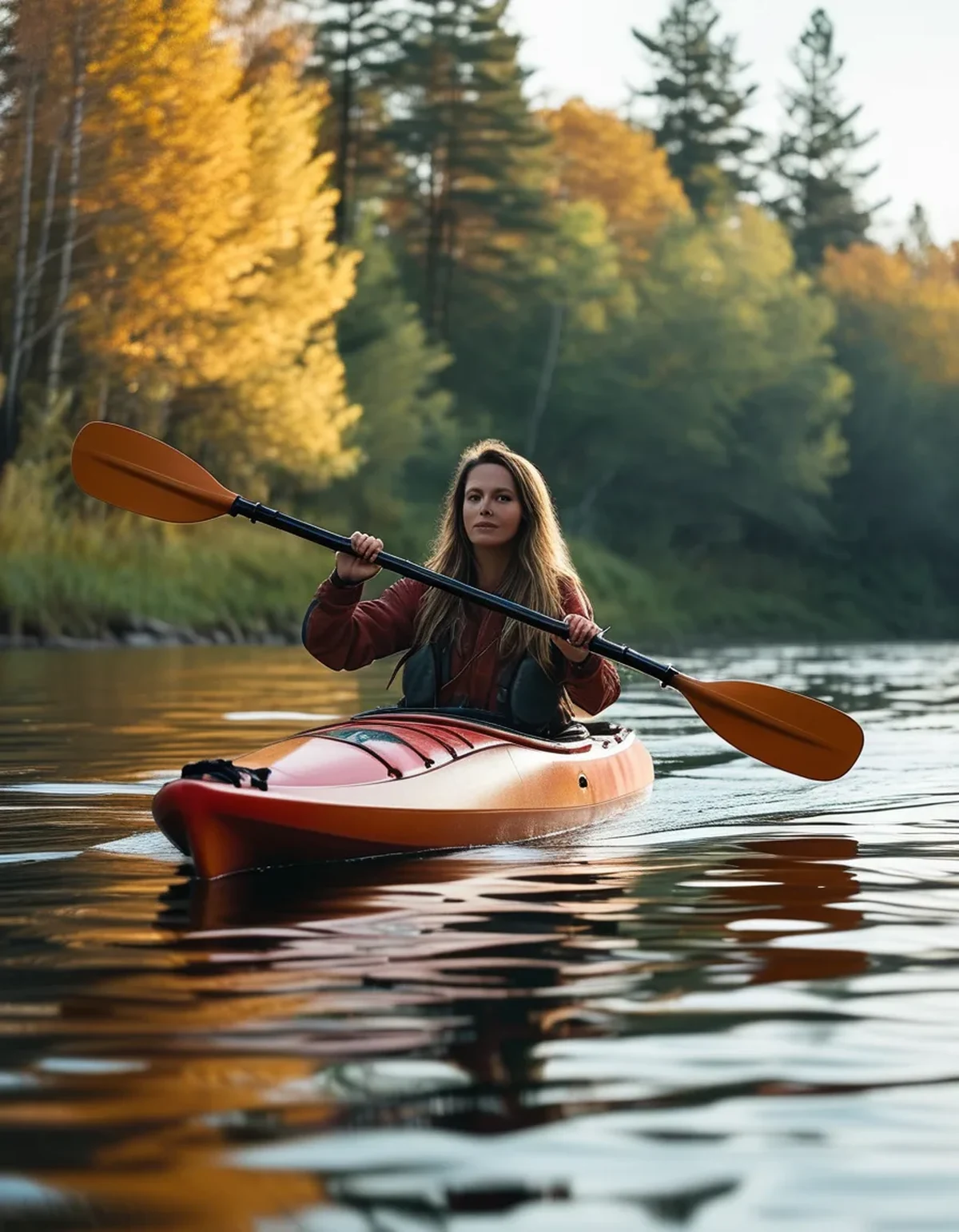
And the equipment differs. River kayaks are shorter and more manoeuvrable, lake and touring kayaks are longer and track straight. Taking a long touring boat onto a river is genuinely difficult, because the thing that makes it good on a lake - that it goes straight - is the thing you do not want when a feature needs avoiding. If a river session felt impossible, check what boat you were in before concluding anything about your paddling.
What Nobody Tells You About the First River Session
You will feel like a beginner again, and everyone does. The gap between competent flat water paddler and competent moving water paddler is real and it catches people who assumed their hours would carry over. This is normal and it closes quickly with the right instruction.
Grade matters and the numbers are not intuitive. Grade 1 is moving water with small waves and few obstructions - genuinely suitable for a competent beginner with instruction. Grade 2 is a meaningful step up, not a small increment, and the scale continues from there. Grade is not a linear difficulty scale and treating it as one gets people into trouble.
Cold water is the actual risk, not the rapids. Water below about 15C causes cold shock on immersion - an involuntary gasp and hyperventilation in the first minute, which is far more dangerous than the swim itself. In autumn, air temperature has nothing to do with water temperature. Dress for the water, not the day.
Never paddle moving water alone as a beginner, and never on a river you have not had described to you. Strainers - fallen trees and branches that water flows through but a body does not - are the most serious hazard in moving water and they do not look dangerous from upstream.
Your first session should be with instruction. This is one of the genuine cases where a day with a coach replaces a season of confused self-teaching. Reading water is taught in hours and discovered in years.
And the good news: the skills come faster than the first hour suggests. Most people who felt hopeless in their first river session are comfortable on grade 1 within three or four outings, because what is missing is knowledge rather than capability.
FAQ: River Versus Lake Paddling Questions, Answered
Can I use my touring kayak on a river?
On easy grade 1 with plenty of width and no tight manoeuvring, sometimes. Anything requiring quick turns and a long tracking boat becomes a genuine liability. It is worth borrowing or renting a shorter boat for the first few sessions rather than judging the experience with the wrong equipment.
What should I learn first?
Wet exit, then bracing, then eddy turns and ferrying, in that order. Reading water develops alongside all of it and mostly comes from being shown features by someone who can already see them.
Is it more tiring than lake paddling?
Different rather than harder. A river does a lot of the moving for you, so the physical demand can be lower, but the attention demand is much higher. Most people find their first river sessions are mentally exhausting and physically easy - the reverse of a long lake paddle.
How do I know if a stretch is suitable?
Ask a local club or an outfitter rather than judging from the bank. Water levels change what a river is - the same stretch can be grade 1 at low water and considerably more at high water, and that is not visible to someone who has not seen it before.
TL;DR:
- The river does not push your boat - differences in speed within the river turn it, and eddy lines are invisible until you learn them
- Boat lean downstream when crossing current lines is the key habit and it is completely counterintuitive
- Forward stroke and fitness transfer; reading water, edging, and ferrying do not
- A long touring boat is a liability on moving water - borrow a shorter one before judging your paddling
- Cold water shock, strainers, and paddling alone are the real risks, far more than the rapids themselves
Book one day of instruction on grade 1 water before your first self-organised river trip. It is the single highest-return day of paddling you will ever pay for, and it turns a confusing hour into a season.
Keep Reading
This article is for general informational and styling purposes only. Fit, sizing, and product availability may vary.